




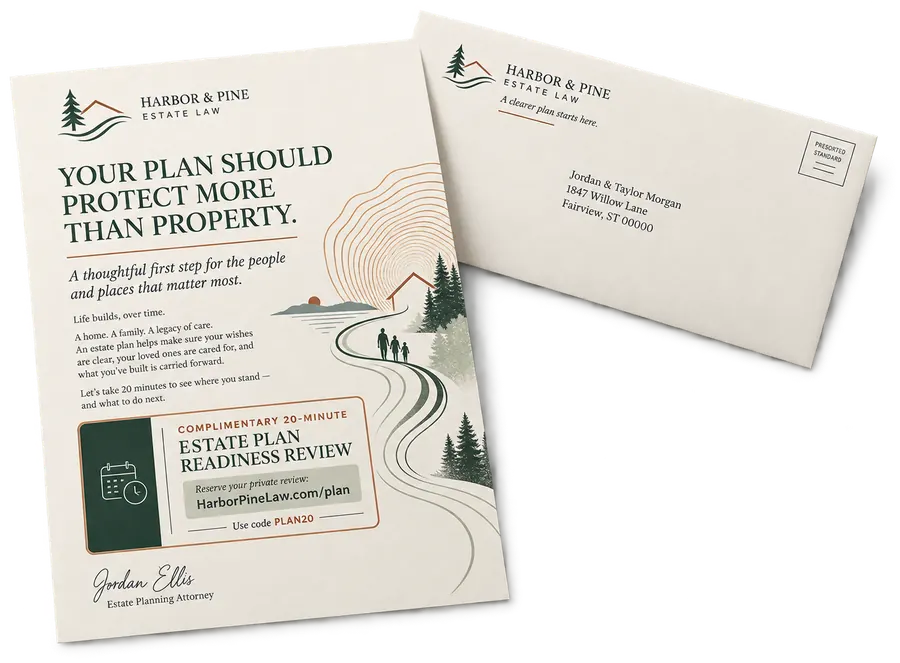
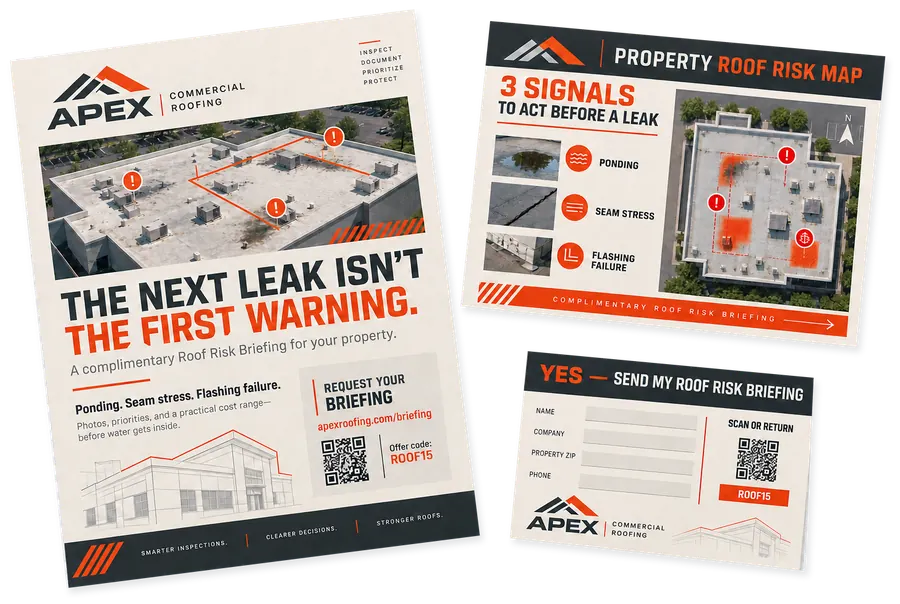
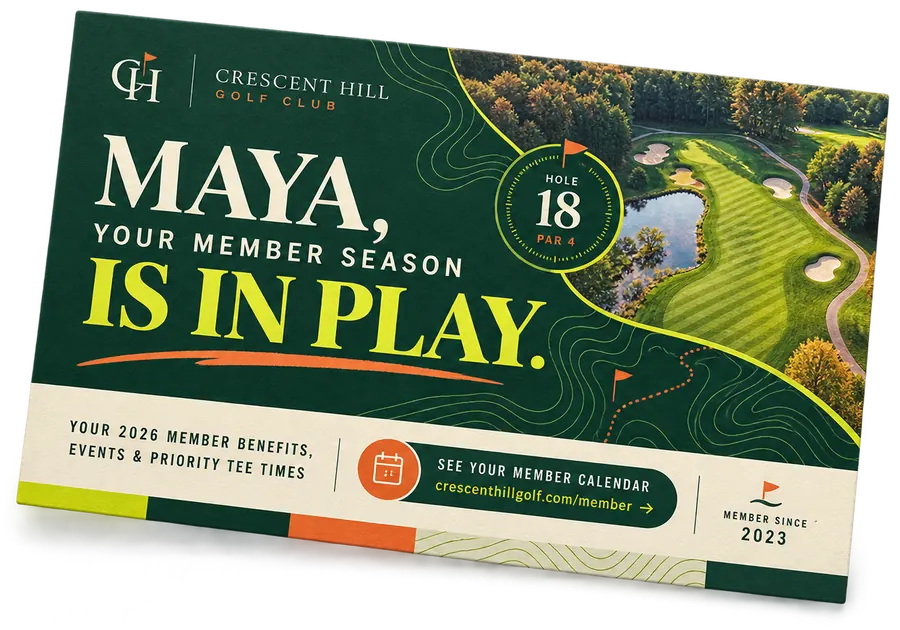

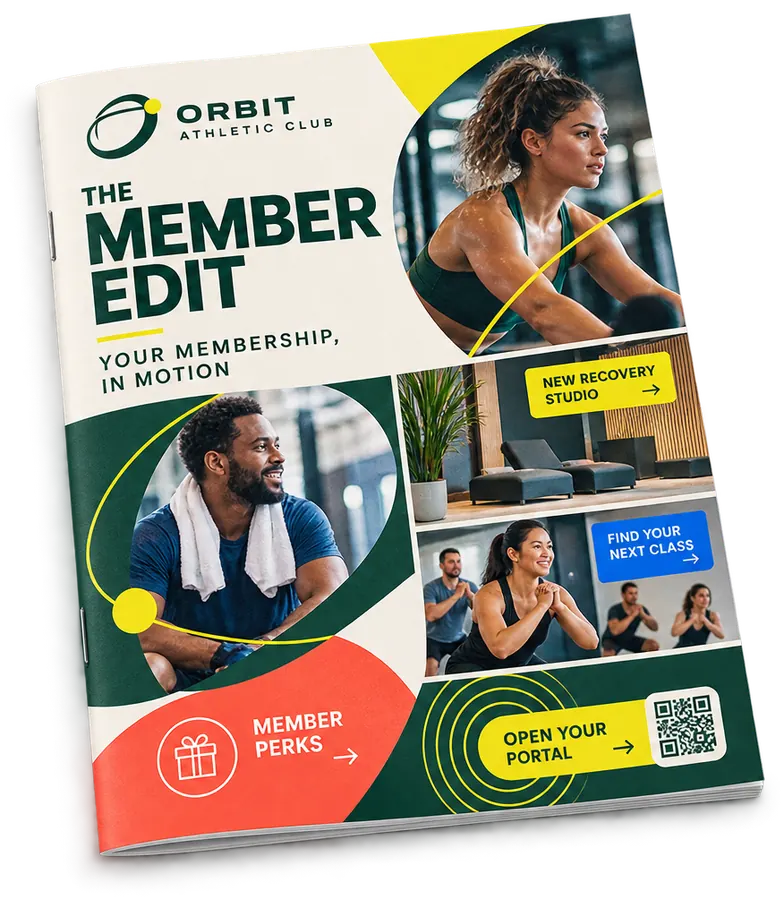
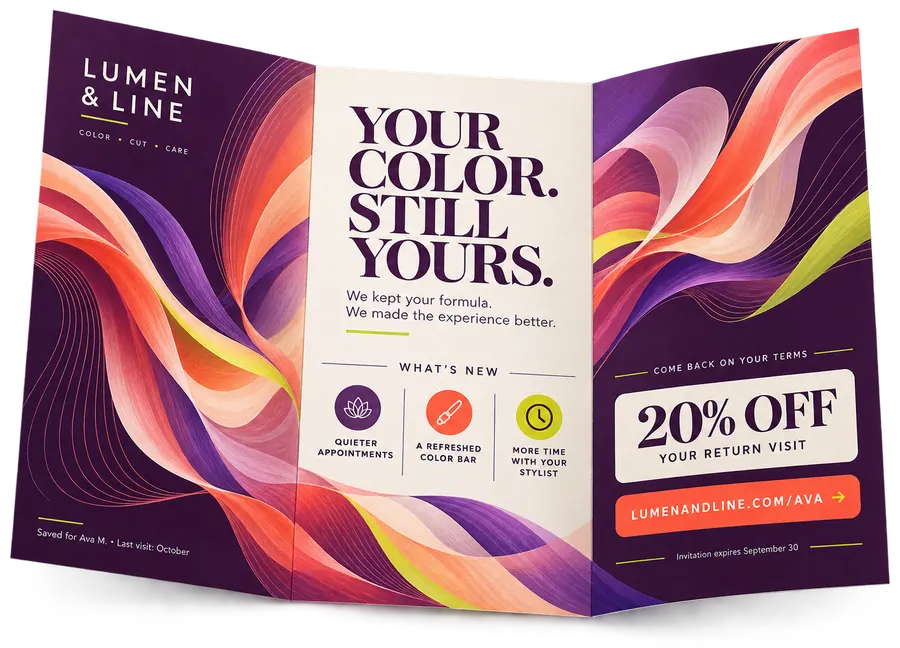
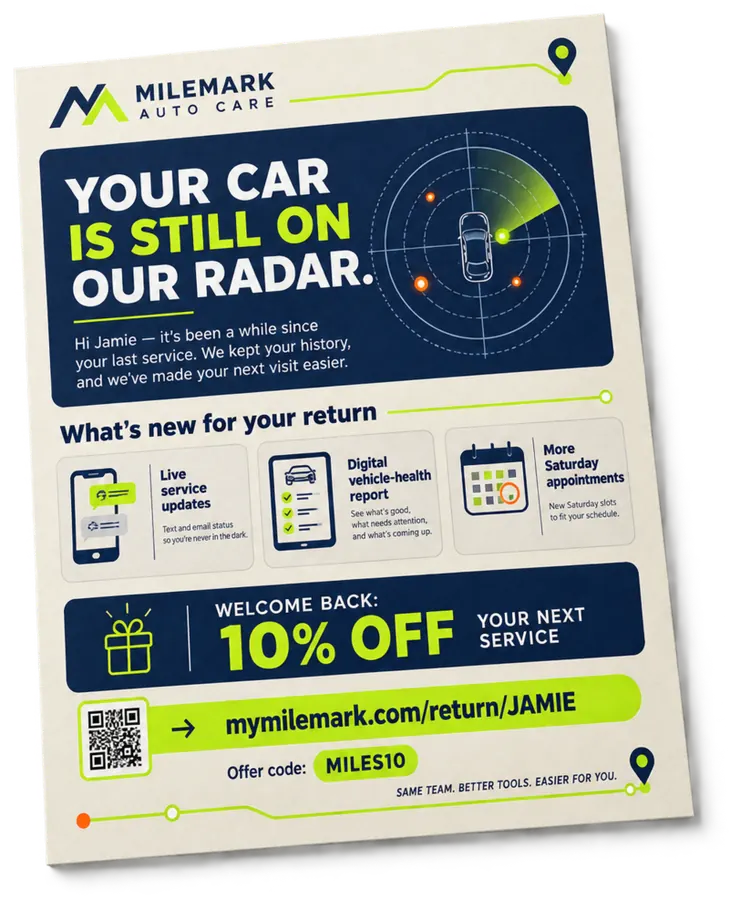
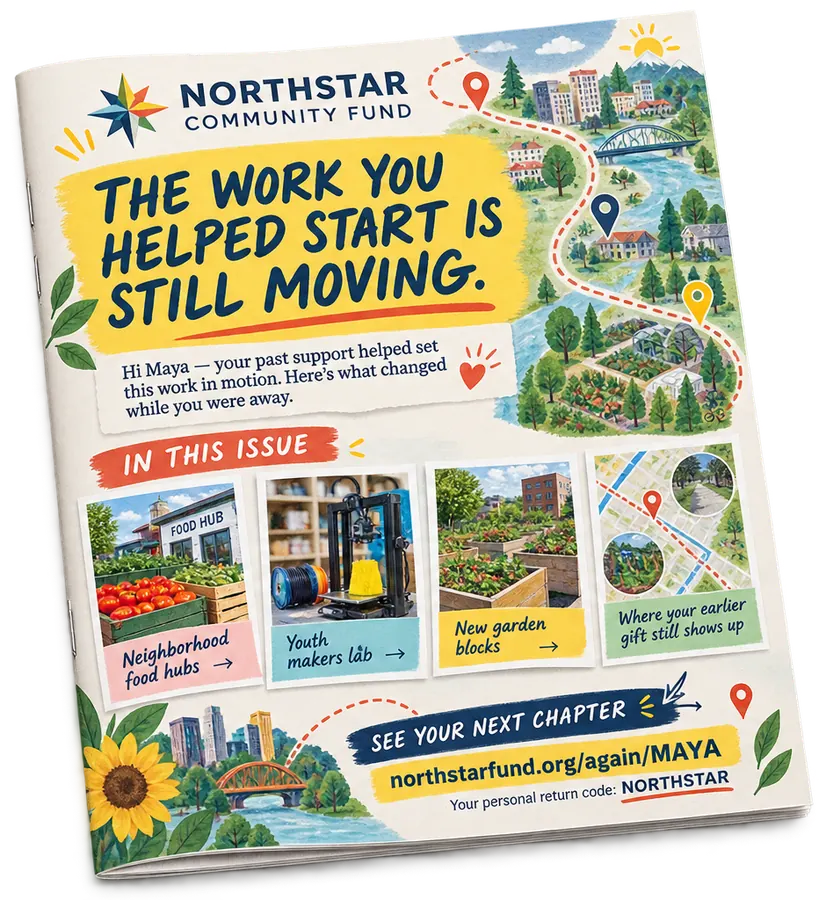



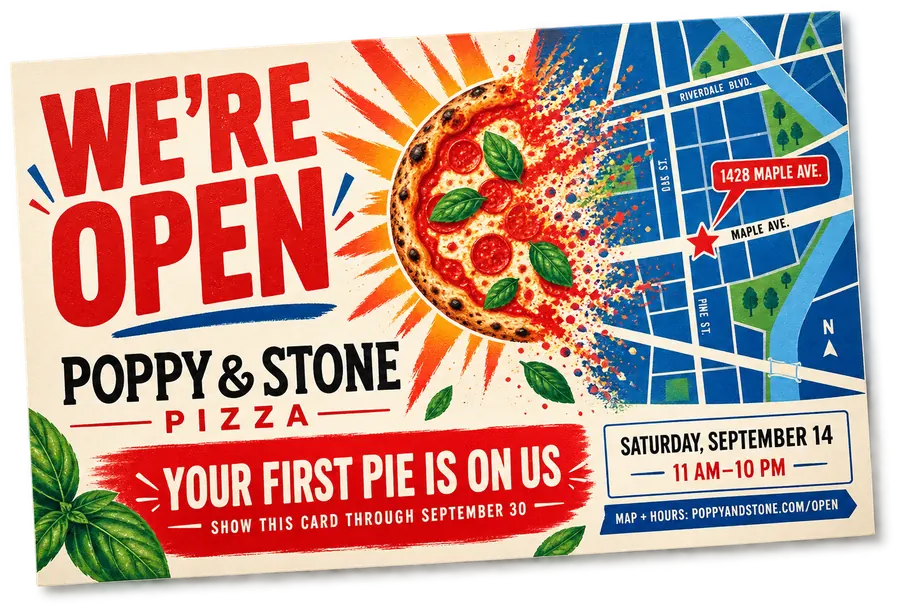
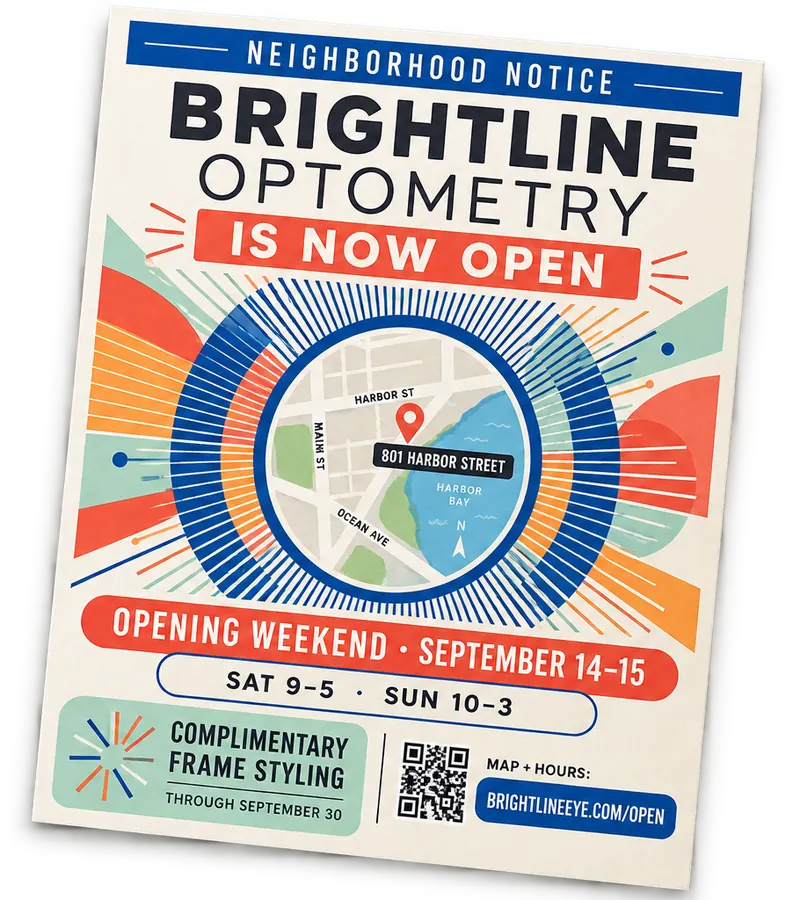
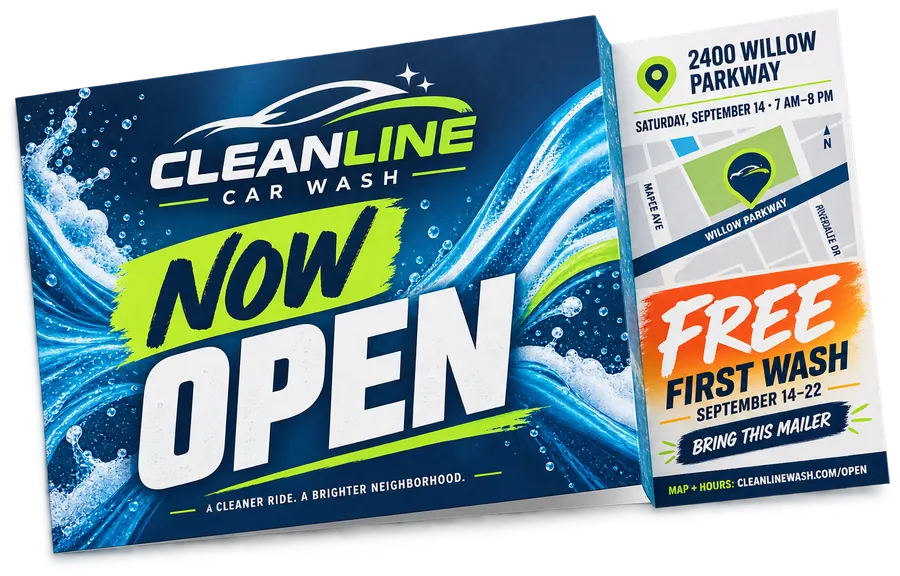
Format
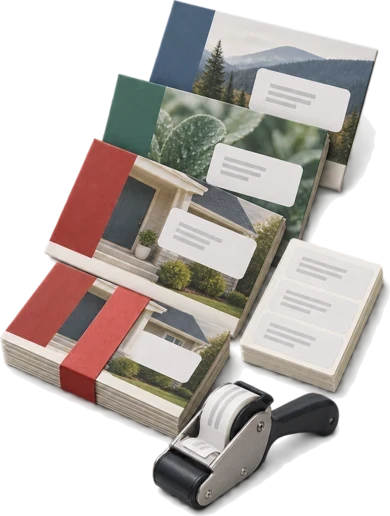
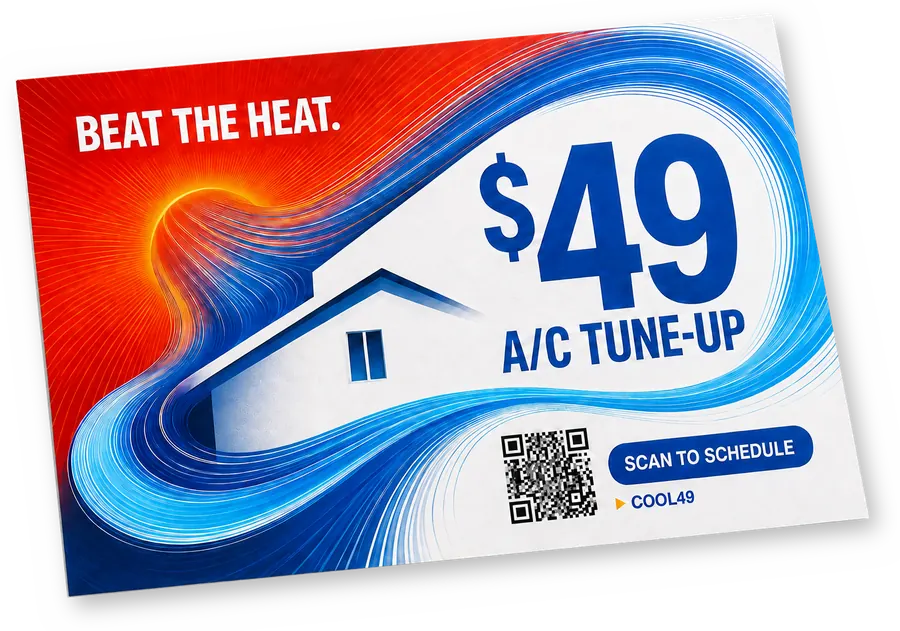
Postcards
Focused offers, announcements, reminders, and location messages that should be visible without opening anything.
Typical objectives

Full-service direct mail marketing
MBI plans, targets, prints, personalizes, and mails complete direct mail campaigns. One organization takes the campaign from the audience definition to the mailbox — strategy, mailing data, graphic design, printing, personalization, postal preparation, and USPS entry.
Services
Audience, design, print and postal entry under one roof.
Most mailers move for one of three reasons: what it costs, whether the dates hold, or a mail house that was never quite straight about either. Unlike broadcast, every piece lands at a household you chose — and here every step behind it belongs to one organization.
Talk through your mailing planThe plan is written before anything is made, so the number you approve is the job that runs. Format, paper, mail class and the in-home date are settled together, because changing one of them later is what moves a price.
What this includes
MBI builds the audience — from your own customer file, from a developed prospect audience, or from the geography that actually describes your market. The count you approve is the count that mails.
What this includes
Our graphic designers work to the specification and the postal rules at once, so the piece that comes back can mail at the rate it was quoted at. Send finished artwork, an older piece to rebuild, or a rough concept.
What this includes
Personalization is set up as a data job rather than a printing trick, so a name, a location, an assigned rep or a unique response code can change piece to piece without becoming a second mailing to manage.
What this includes
You approve the piece with real records in it rather than placeholder text, so nothing reaches a press on an assumption.
What this includes
The press is ours, so quantity, versions and turnaround are decisions MBI makes rather than negotiates with an outside printer. That is usually what decides whether a date survives a change.
What this includes
Folding, tabbing, inserting and die-cutting happen in the same building as the press, so a job never leaves the floor to become mailable and come back.
Every version is addressed inside one job instead of running as separate mailings, which is what keeps a multi-market campaign on one schedule and one invoice.
What this includes
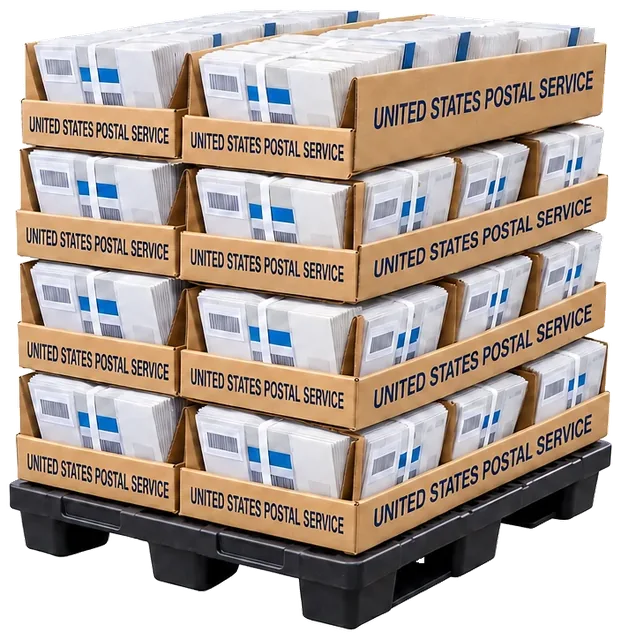
Presorting, barcoding and address quality are what earn the rate, and MBI does that work rather than reselling someone else's. You see what the mailing qualified for and where it entered, not a postage line that arrives without workings.
What this includes
Targeting
MBI builds the mailing audience around the objective — from your own customer file, from a developed prospect audience, or from the geography that actually describes your market. Quantity follows the audience; it is not the goal.
Each geography means something different
A consumer or business audience developed around an appropriate geography and relevant selection criteria, with the usable count confirmed before anything is produced.
Authorized customer, member, donor, prospect, or account data, prepared for addressing, segmentation, and approved personalization.
City limits, a radius, a modeled drive-time area, or a ZIP Code — recognizing that each one describes a different geography.
Records standardized and de-duplicated, suppression files applied, and the selected audience organized for production and postal preparation.
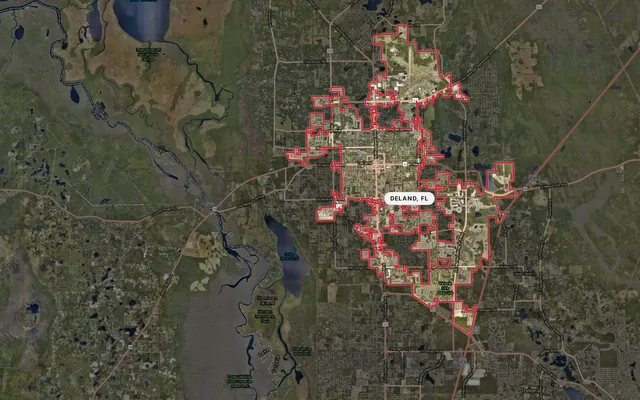
—
City limits
— people
Define the area
City limits show a legal municipal boundary. They are not the same as a ZIP Code or a USPS delivery area.
A radius is a fixed distance from the pin. Drag the pin to place the center on a branch, location, or other point.
Drive time is a modeled travel area based on the pin and selected duration; it is not a postal boundary.
Loading market data
Requesting boundary and census information. This may take a few seconds.
Process
Four steps.
What outcome the campaign is for, what you want recipients to do, and when it needs to be in the mailbox. The response path is decided here, not later, because the piece has to carry it.
Your house file, a developed prospect audience, or the geography that describes your market. The data is standardized, deduplicated, and suppressed, and the usable count is confirmed before anything is produced.
Format, creative, specifications, and personalization rules are approved together; then printing, variable data, finishing, and addressing. You review representative proofs, including variable records, before the run.
Postal preparation, documentation, and USPS entry — then the response data the campaign was designed to produce.
Share the objective, audience, quantity, artwork status, and desired in-home date. MBI reviews the requirements and recommends the mailing approach, specifications, schedule, and next steps.
Discuss your specificationsCampaign Types
Most direct mail work resolves to one of a handful of objectives. Naming the objective first is what decides the audience, the format, the personalization, and the response path — in that order.
The format has to support the amount of information, the audience, the personalization, the response path, the production requirements, and the postal plan. MBI produces all of the following in-house.
Mailing to businesses rather than households? See B2B direct mail →
Objective
Reach households or businesses that have not bought from you yet — built on a developed prospect audience or on the geography that describes your market.
Explore targeted direct mail →
Typical formats
Objective
Mail to a defined audience with a response path that captures the lead and routes it to the team that works it.
How direct mail response is measured →
Typical formats
Objective
Mail to your own file: renewals, reminders, statements, program updates, member communications, and thank-you pieces.
Explore personalized direct mail and variable data printing →
Typical formats
Objective
Select the lapsed part of your customer file by recency, value, or product, and mail it a message that acknowledges the gap rather than repeating the acquisition offer.
Audience targeting and mailing lists →
Typical formats
Objective
Invitations, save-the-dates, and reminder waves timed against a fixed date, with the in-home window planned backwards from the day the room has to fill.
Typical formats
Objective
Announce a new location, a move, a new service, or an expanded footprint to the neighborhoods it actually serves.
Typical formats
Format
Focused offers, announcements, reminders, and location messages that should be visible without opening anything.
Typical objectives
Format
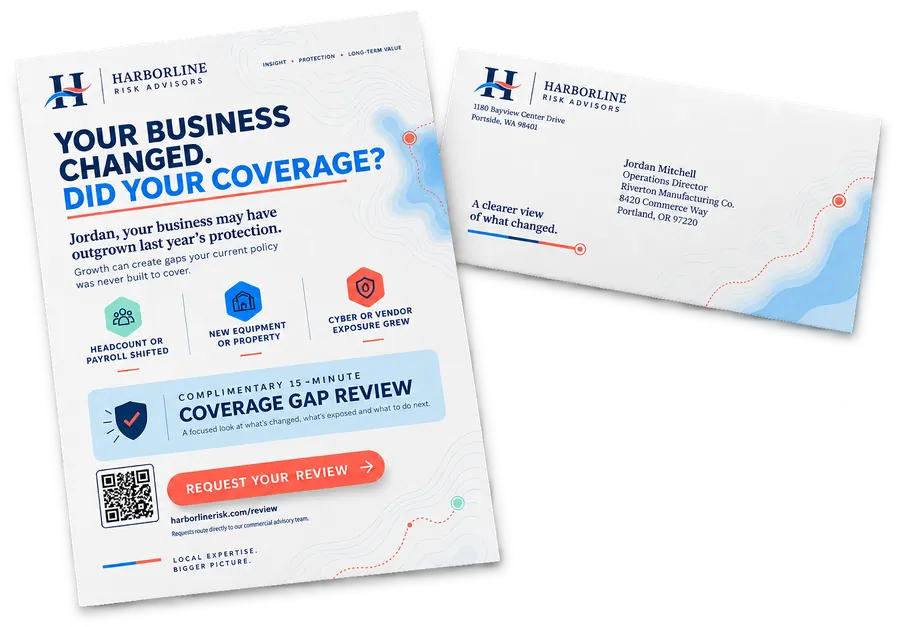
Messages that need more explanation, several components, or an enclosed way to reply.
Typical objectives
Format
Folded formats that buy additional storytelling space in one integrated piece, with no envelope between the message and the reader.
Typical objectives
Format
Multi-page formats for several products, programs, services, or stories in one mailing.
Typical objectives
Format
Purpose-built communications organized around one event, one notice, or one ask — including appeals.
Typical objectives
Format
Coordinated letters, inserts, reply devices, envelopes, and other campaign components mailed together as one piece.
Typical objectives
By industry
Why MBI
The record behind the work.
MBI has been producing and mailing direct mail since 1989. Data, print, and delivery are all in-house, which is why one team can answer for the whole campaign instead of coordinating three vendors on your behalf.
Direct mail since 1989, through every change in postal rules, data practice, and print technology.
Audience, data, graphic design, print, finishing, and USPS entry handled by one organization, with no seams.
Campaigns mail into all 50 states and more than 3,000 U.S. cities on one program.
Commercial and variable-data printing, finishing, addressing, and mail preparation, all under one roof.
Record-level names, offers, images, nearest locations, and response URLs, proofed before the run.
The schedule is built back from your in-home date, and one team owns it.
One specification sets what stays consistent and what varies by market, across every location.
Mail aligned with landing pages, email, advertising, and CRM follow-up, planned as one campaign.
FAQs
Answers buyers ask for most.
MBI begins with the campaign objective, audience or geography, estimated quantity if known, desired format if known, personalization requirements, artwork status, response method, and target in-home window. It is fine if several of those are still undecided.
No answers match your search. Try a different word or phrase.
Explore further
Formats, audiences, and decisions — one guide at a time.
Format, quantity, data, and postal plan move the number more than anything else — see what shapes price before artwork is finalized.
Explore direct mail cost →For a defined consumer or business audience, with address-level personalization and measurement.
Explore targeted direct mail →House file or built audience — hygiene, deduplication, and suppression decide who's actually mailable.
Explore audience and mailing lists →Size, postal category, and address-block layout decide whether a postcard clears the mail stream cleanly.
Explore postcard mailing services →Variable data ties each piece to one record — approved fields, fallbacks, and proofs keep it accurate at scale.
Explore personalized direct mail →Accounts and roles replace households — addressing, personalization, and sales follow-up all work differently here.
Explore B2B direct mail →One program specification, per-market versions, coordinated waves and reporting — run it as a single campaign.
Explore multi-location and nationwide mail →Landing pages, email, paid ads, and sales follow-up all read off the same mailing under one campaign plan.
Explore direct mail and digital →Response codes and matchback have to be built in before the drop, not added after results come in.
Explore campaign measurement →Print-only, mailing, and full-service vendors split up ownership differently — know who holds data and schedule before you sign.
Explore choosing a direct mail company →Get Started
A focused campaign brief that responds to what you know and skips what you do not. Your answers go to a real direct mail specialist for review.