
Healthcare & Wellness / Medical & Specialty Care
Pharmacy marketing that lives in the text thread the patient opted into
Pharmacy marketing from MBI is patient text messaging run as one programme — prescription-ready and pickup alerts, refill reminders, medication-adherence education, two-way messaging and clinical-service appointment reminders — planned, written, built and scheduled by a single in-house team, with consent and applicable privacy controls preserved throughout.
Not sure where to start? Talk with our teamPharmacy texting
What does pharmacy text message marketing put in a patient's thread?
The short answer
A pharmacy's thread carries prescription-ready and pickup alerts, refill reminders, medication-adherence education, two-way messaging and clinical-service appointment reminders. MBI plans that programme, writes each message, builds the flows and schedules the sends, so every message a patient gets sounds like the same pharmacy, with consent and applicable privacy controls preserved throughout.
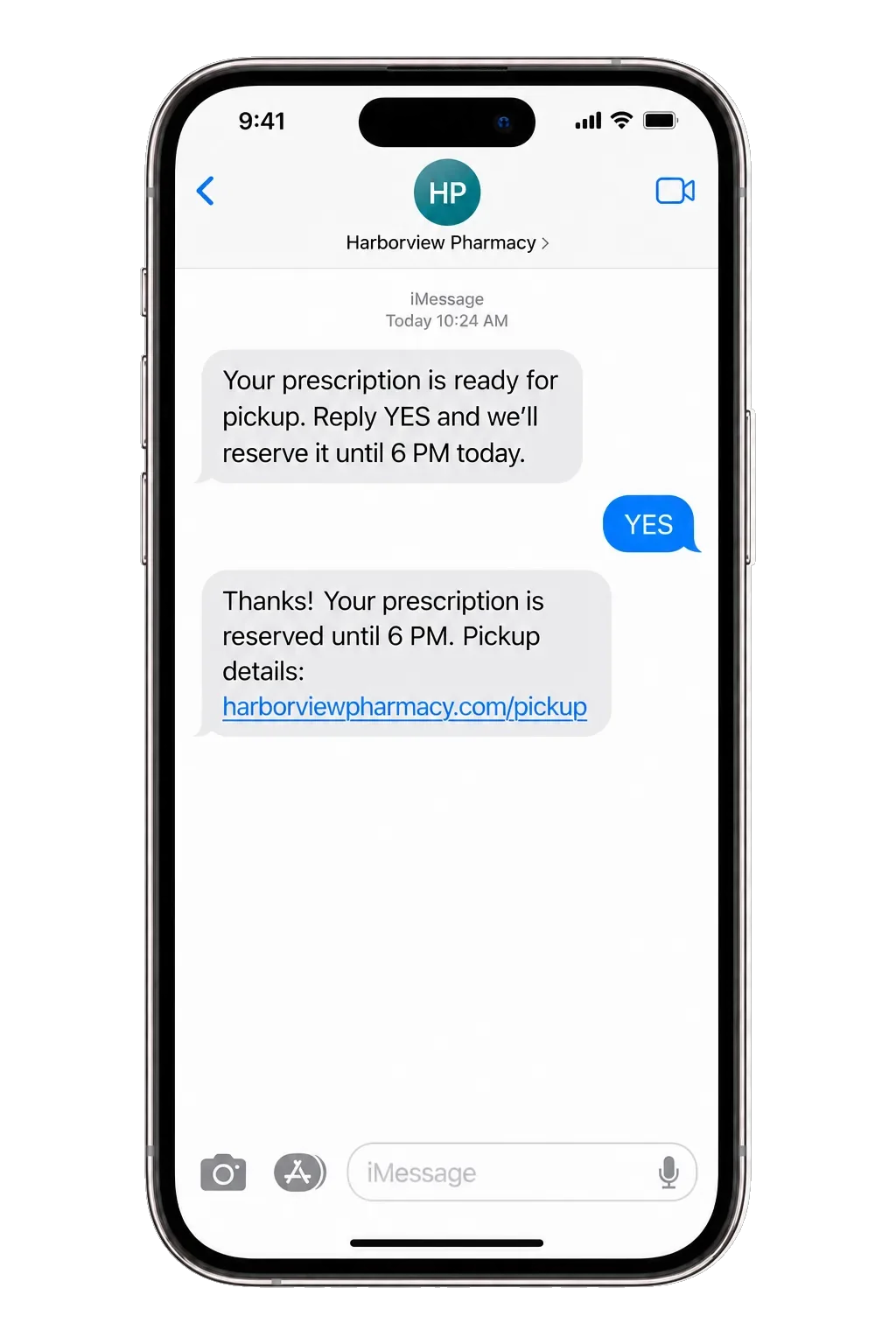
The documented uses. Documented pharmacy SMS uses include prescription-ready/pickup and refill reminders, medication-adherence education, two-way messaging, and clinical-service appointment reminders.
The thread
Refill reminders
How does pharmacy refill reminder texting work alongside the prescription-ready alert?
The short answer
Both messages live in one thread. The prescription-ready alert tells a patient a prescription is waiting to be picked up; the refill reminder is the message about refilling one already prescribed. MBI writes both, builds the flow that keeps them apart and schedules the sends, so the pharmacy speaks once rather than twice.
One team. MBI is one company that plans, produces, and delivers campaigns from a single in-house team in DeLand, Florida, and has done so since 1989, so one team answers for the whole campaign.
SMS
Two-way messaging
What happens when a patient texts back?
The short answer
Two-way messaging is one of the uses this thread supports, so a reply is a message the pharmacy can answer rather than a dead end. MBI builds the reply lane and writes the messages that invite it, and who answers on the pharmacy's side is settled when the programme is planned, with consent and applicable privacy controls preserved.
CTIA's Messaging Principles and Best Practices state that message senders should ensure that consumers have the ability to opt-out of receiving messages at any time, should support multiple mechanisms of opt-out including phone call, email, or text, and should acknowledge and honor all consumer opt-out requests by sending one final opt-out confirmation message per campaign to notify the consumer that they have opted-out successfully, with no further messages sent following the confirmation message.
CTIA Messaging Principles and Best Practices, May 2023
SMS
Clinical services
How do clinical-service appointment reminders fit in the same thread?
The short answer
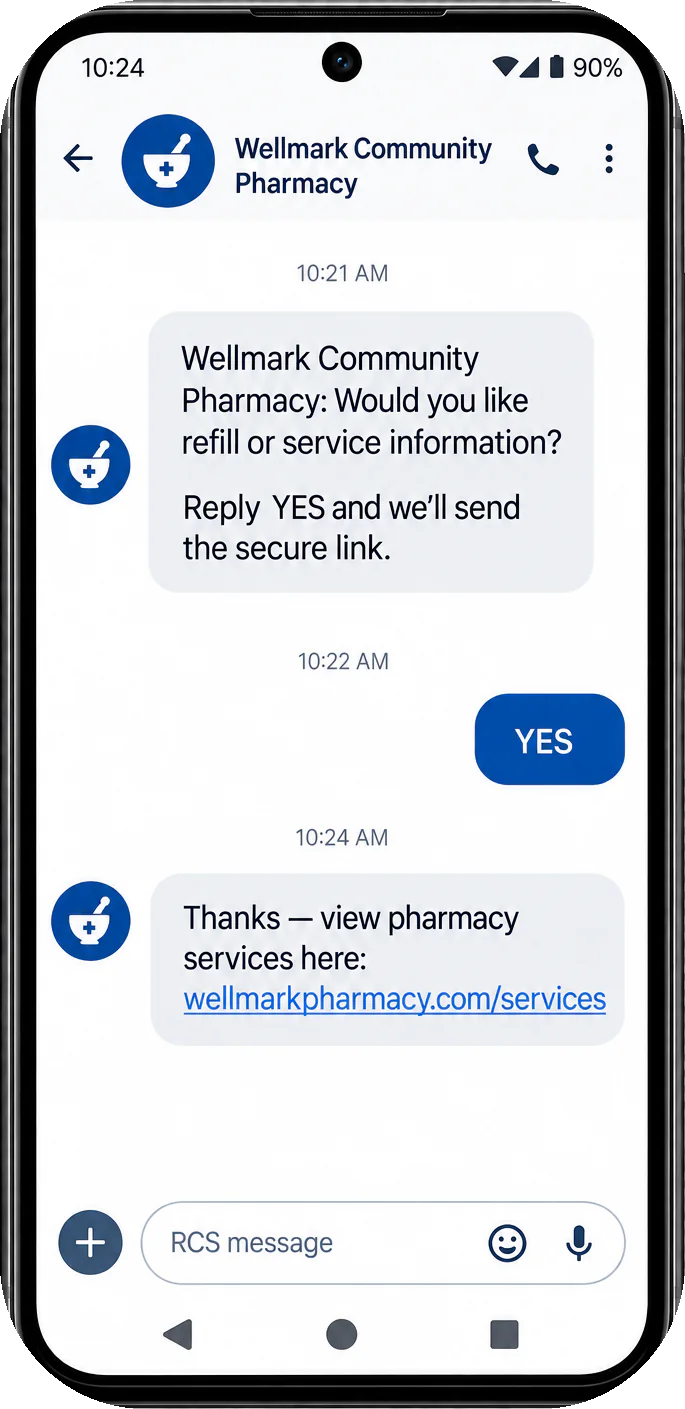
Clinical-service appointment reminders are one of the uses pharmacy texting covers, so the thread that carries a pickup alert and a refill reminder can carry the reminder for a booked clinical service too. MBI writes those reminders and schedules them against the pharmacy's own service calendar, in the same voice as the rest.
The one campaign. This vertical's one researched campaign is a prescription-ready, refill, adherence, two-way, and clinical-service appointment reminder SMS campaign.
Consent and privacy
How does MBI handle consent and privacy in a pharmacy texting programme?
The short answer
Consent and applicable privacy controls are preserved, and that constraint shapes the programme rather than sitting beside it. CTIA's messaging principles say messages should be sent only after the consumer has opted-in, that senders should not use rented, sold or shared opt-in lists, and that senders should ensure consumers can opt-out at any time.
The one limit. This vertical's research records one limit on the whole programme: preserve consent and applicable privacy controls.
CTIA's Messaging Principles and Best Practices state that message senders should support opt-in mechanisms and that messages should be sent only after the consumer has opted-in to receive them, and list, among the mechanisms by which a consumer might demonstrate opt-in consent, entering a telephone number through a website, clicking a button on a mobile webpage, initiating the text message exchange in which the message sender replies only with responsive information, signing up at a point-of-sale or other message sender on-site location, and opting-in over the phone using interactive voice response technology.
CTIA Messaging Principles and Best Practices, May 2023, §5.1.2
CTIA's Messaging Principles and Best Practices state that message senders should also document opt-in consent by retaining, where applicable, the timestamp of consent acquisition, the consent acquisition medium, a capture of the experience used to secure consent, the specific campaign for which the opt-in was provided, the IP address used to grant consent, the consumer phone number for which consent was granted, and the identity of the individual who consented; and that a consumer opt-in should not be transferable or assignable and should apply only to the campaign and specific message sender for which it was intended or obtained.
CTIA Messaging Principles and Best Practices, May 2023, §5.1.2
CTIA's Messaging Principles and Best Practices state that message senders should not use opt-in lists that have been rented, sold, or shared to send messages and should create and vet their own opt-in lists, and that message senders should retain and maintain all opt-in and opt-out requests in their records and should process telephone deactivation files regularly.
CTIA Messaging Principles and Best Practices, May 2023, §§5.1.4–5.1.5
Questions
Questions a pharmacy asks before it texts
Searched for independent pharmacy marketing, community pharmacy marketing or pharmacy advertising? Same work, same answers.
Which messages does MBI write for a pharmacy?
One programme, carrying prescription-ready and pickup alerts, refill reminders, medication-adherence education, two-way messaging and clinical-service appointment reminders. MBI plans it, writes each message, builds the flows and schedules the sends, so every message a patient gets from the pharmacy sounds like the same pharmacy.
What can a pharmacy text a patient about?
Prescription-ready and pickup alerts and refill reminders are two of the messages a pharmacy texting programme carries; medication-adherence education, two-way messaging and clinical-service appointment reminders are among the others. MBI writes those messages and schedules them against the pharmacy's own day rather than a generic calendar.
Can pharmacy texting teach as well as announce?
Yes. Medication-adherence education sits alongside the alerts, so the thread can teach and can listen, not only announce. MBI writes that education sequence in the pharmacy's voice and decides where in the programme it belongs, with consent and applicable privacy controls preserved.
How does a pharmacy get permission to text a patient?
From the patient, before the first message. CTIA's messaging principles say messages should be sent only after the consumer has opted-in, and list entering a telephone number through a website, signing up at a point-of-sale or other on-site location, and opting-in over the phone among the ways consent may be shown.
How does a patient stop the messages?
At any time, and in more than one way. CTIA's messaging principles say senders should ensure consumers can opt-out at any time, should support multiple mechanisms including phone call, email or text, and should honor every request with one final opt-out confirmation message per campaign and nothing after it.
Where do the phone numbers in a pharmacy texting programme come from?
The pharmacy's own opt-ins, and nowhere else. CTIA's messaging principles say senders should not use opt-in lists that have been rented, sold or shared and should create and vet their own, should keep every opt-in and opt-out request in their records, and should process telephone deactivation files regularly.
Who runs the programme, the pharmacy or MBI?
MBI. One company plans, produces and delivers the campaign from a single in-house team in DeLand, Florida, and has since 1989, so one team answers for the whole programme instead of the pharmacy coordinating three vendors. Consent and applicable privacy controls are preserved throughout.
Get started
Start a pharmacy texting programme.
Say which of the five messages it should carry first, and the pharmacy it runs for. It goes to a real member of the MBI team, not a queue.