
Healthcare & Wellness / Senior & Community Health Services
Community-based care marketing that earns the referral and promotes the class
Community-based care marketing from MBI is the outreach a community-care hub or a health and human-services organization runs to get a clinician to refer and a participant to enroll: provider outreach mail, class and workshop promotion, consent-based texting, and the flyers, fact sheets, brochures and class schedules printed behind them — planned, produced and delivered by one team.
Not sure where to start? Talk with our teamCommunity-based care marketing
How does community health outreach marketing reach clinicians and participants at once?
The short answer
Community health outreach marketing works on two audiences at once. Provider outreach mail asks a practice to point patients toward the classes a program is running, and the same program is promoted to the community in print and through consented texting. MBI builds both audiences, prints the pieces and sends the mail and the messages.
The three campaigns. Three campaign concepts are researched for this vertical: a provider outreach campaign to increase referrals and participation in community programs; an evidence-based chronic-disease self-management or falls-prevention class and workshop enrollment campaign; and a consent-based SMS program-enrollment, resource-navigation, benefit-deadline and appointment-reminder campaign.
One team. MBI plans, produces and delivers direct mail, print and digital campaigns from a single team in DeLand, Florida, and data, print and delivery have been in-house since 1989.
USPS Domestic Mail Manual 602.5 provides that each address, except for mail bearing an alternative address format, in a mailing at commercial First-Class Mail presorted or automation prices or USPS Marketing Mail prices is subject to the Move Update standard, and that each address and associated addressee used on the mailpieces in a mailing must be updated within 95 days before the mailing date with one of the USPS-approved methods, which include Address Change Service and the National Change of Address Linkage System (NCOALink).
USPS Domestic Mail Manual 602.5
direct mail marketing services seminar marketing services printing services
Mailer · Direct Mail
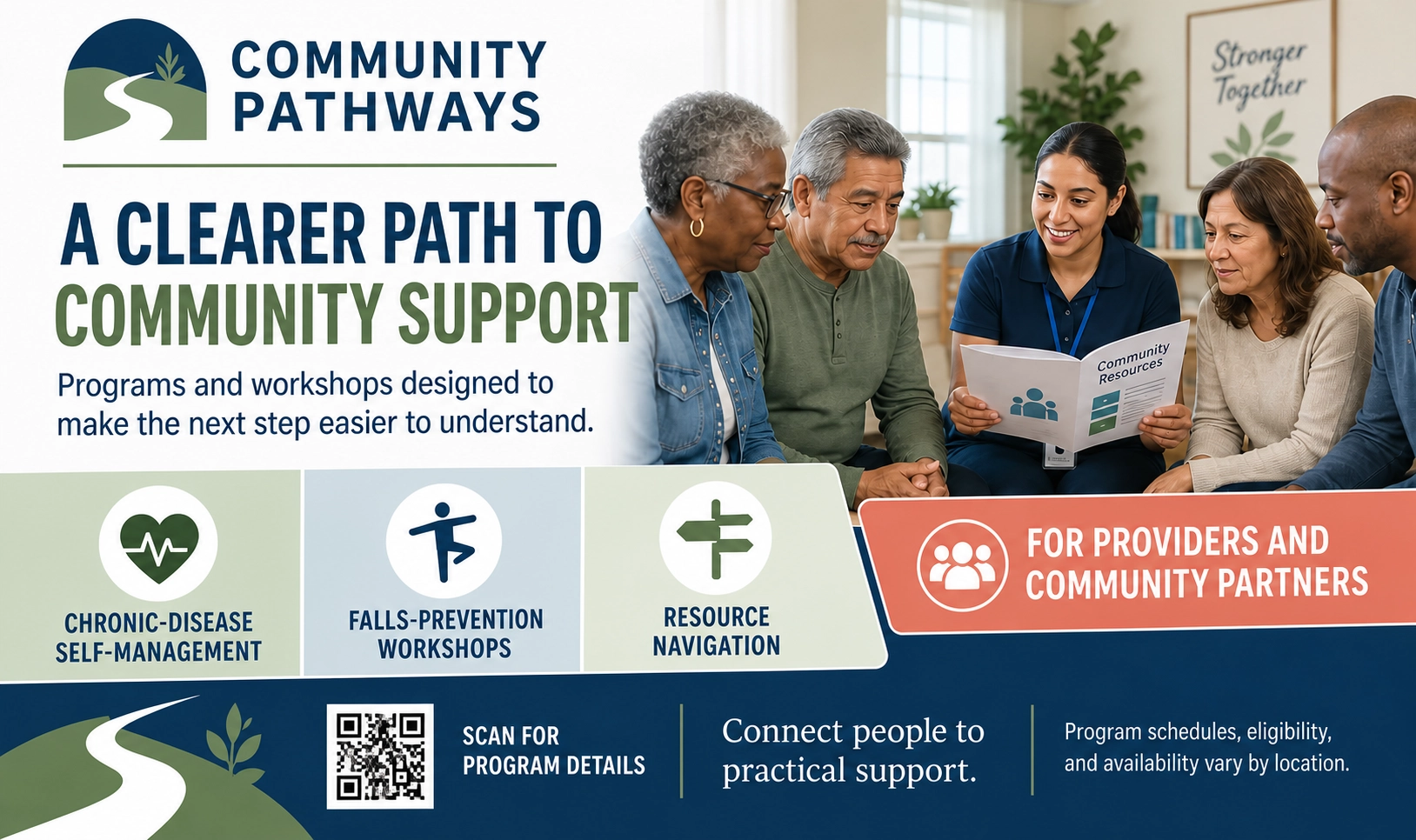
Postcard · Direct Mail
At once
Provider outreach
What do provider referral mailers have to say to a busy practice?
The short answer
Provider referral mailers tell a busy practice what a program has available: the chronic-disease self-management or falls-prevention workshops and classes it runs, and how a clinician points a patient toward one. Follow-up postcards repeat it to the same desks. MBI builds the practice list, prints both pieces and mails them.
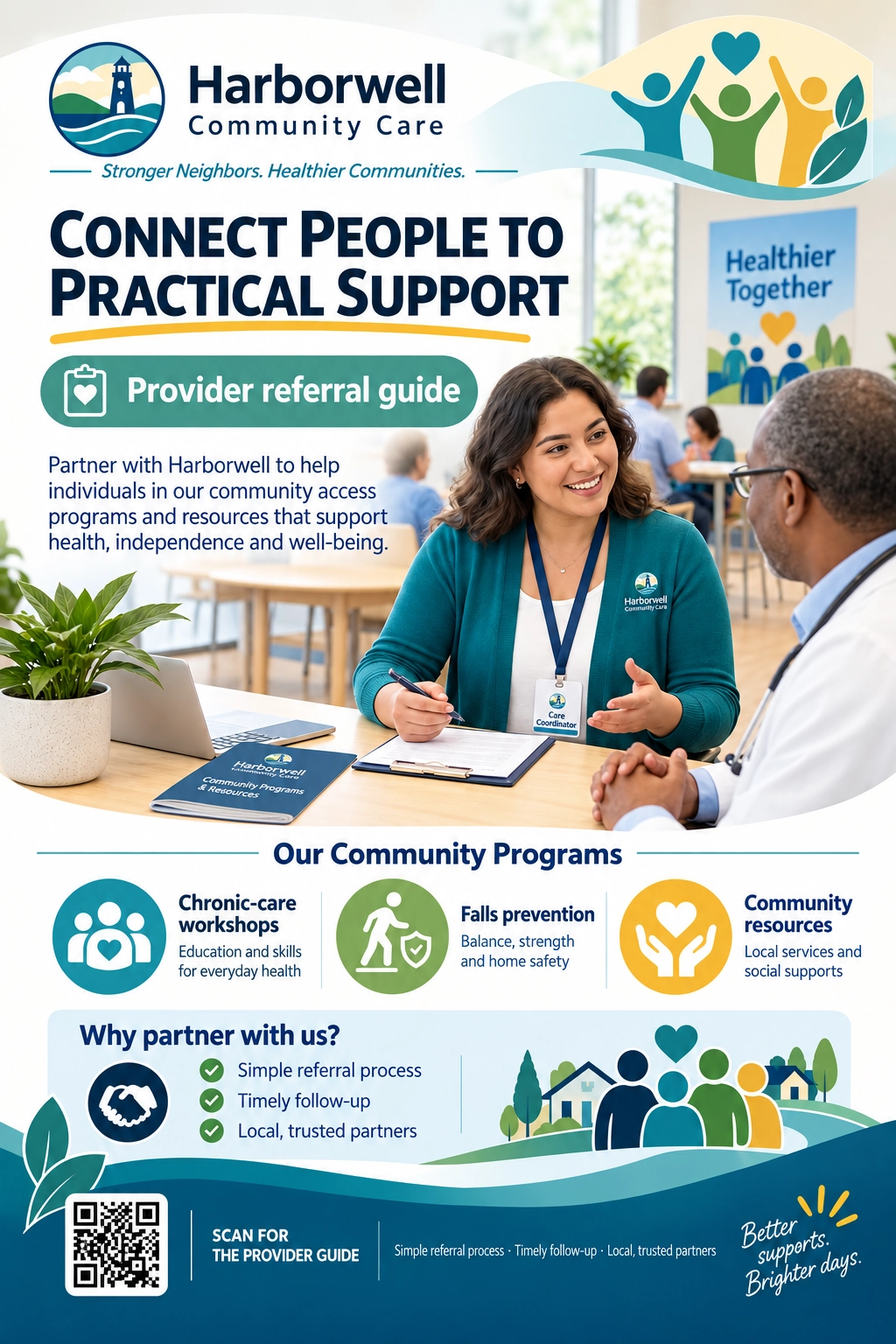
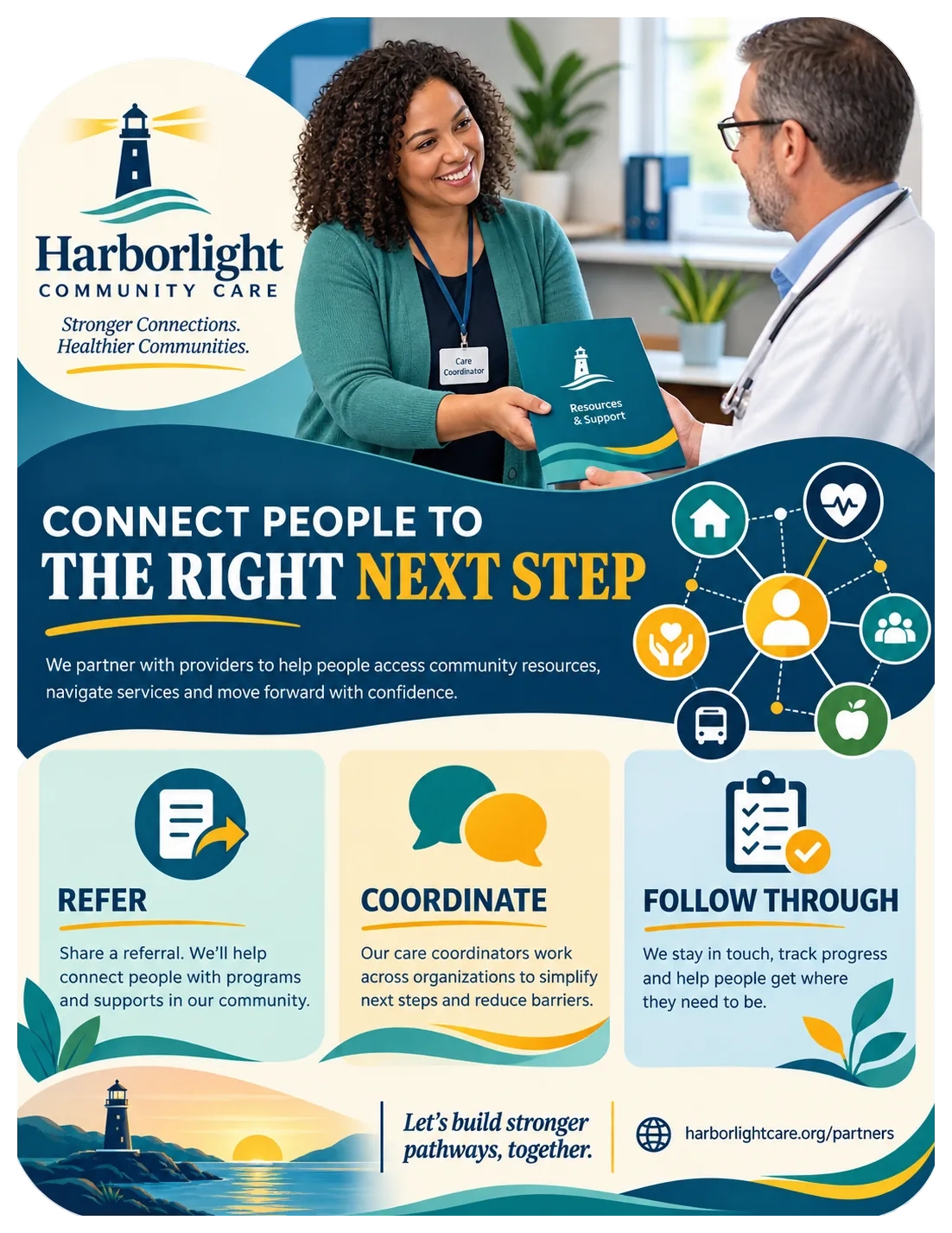
A practice, not a patient. Provider outreach mailers and follow-up postcards can promote available chronic-disease self-management or falls-prevention workshops and classes, so the mail audience for this vertical can be a practice rather than a patient.
The two mail pieces. Provider outreach mailers and follow-up postcards are the mail pieces named for this vertical, and §4 lists follow-up postcards among the print formats.
45 CFR 164.508(a)(3) provides that a covered entity must obtain an authorization for any use or disclosure of protected health information for marketing, except if the communication is in the form of a face-to-face communication made by a covered entity to an individual, or a promotional gift of nominal value provided by the covered entity; and if the marketing involves financial remuneration to the covered entity from a third party, the authorization must state that such remuneration is involved.
HIPAA Privacy Rule, 45 CFR 164.508(a)(3)
Flyer · Printing
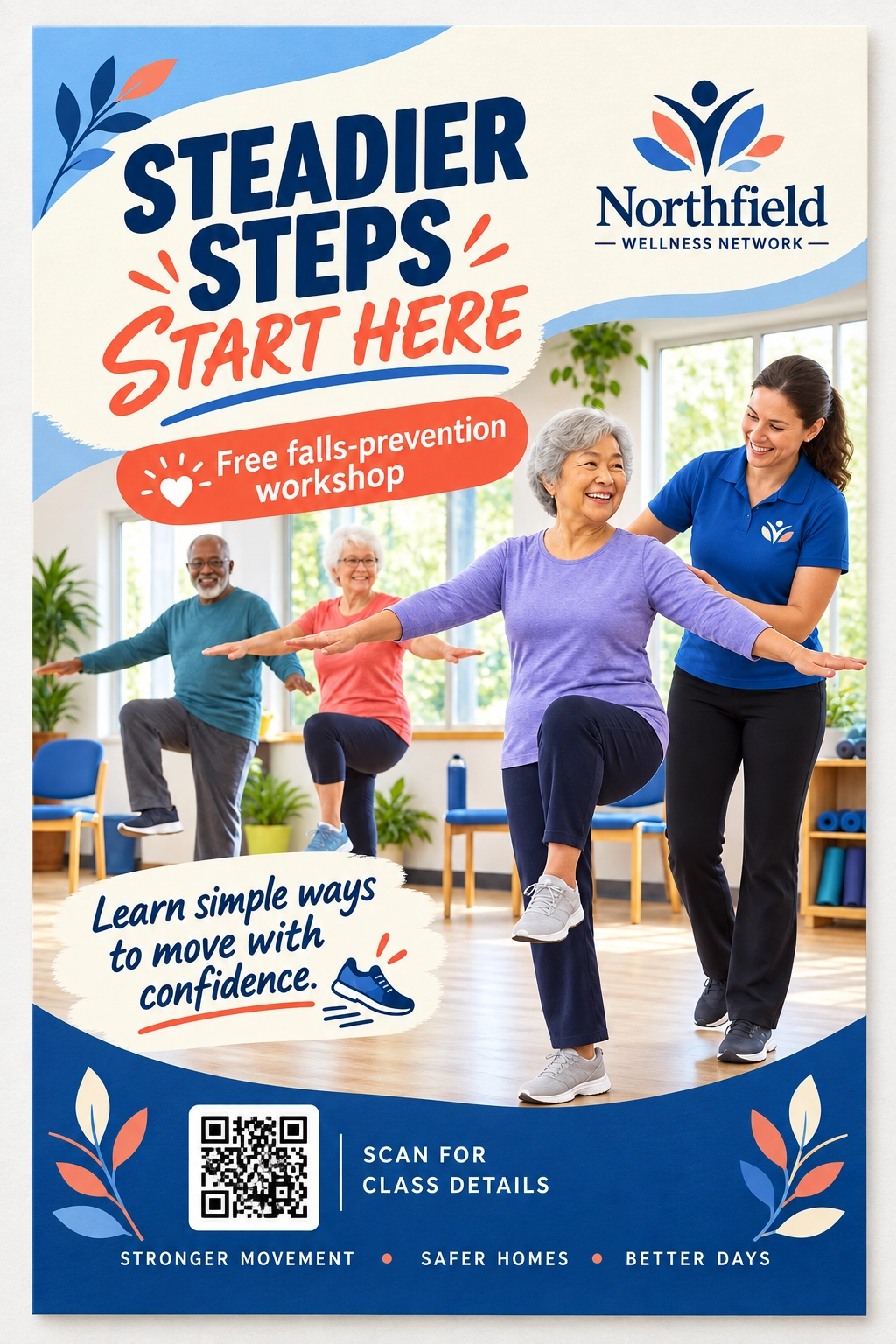
One-sheet · Printing
Class enrollment
How does falls prevention class marketing reach a participant?
The short answer
Evidence-based self-management and falls-prevention workshops and classes are promoted through provider and community outreach rather than one announcement. The invitation goes out by mail, the schedule is printed for the room and the front desk, and an opted-in participant gets the reminder before the session. One team plans, prints and sends all three.
The classes. Community-care hubs and CDC materials describe evidence-based self-management and falls-prevention workshops and classes, promoted through provider and community outreach.
seminar direct mail medicare seminar marketing seminar marketing services
The roster
Kit · Printing
SMS
Can text message outreach for community health programs reach the people a program serves?
The short answer
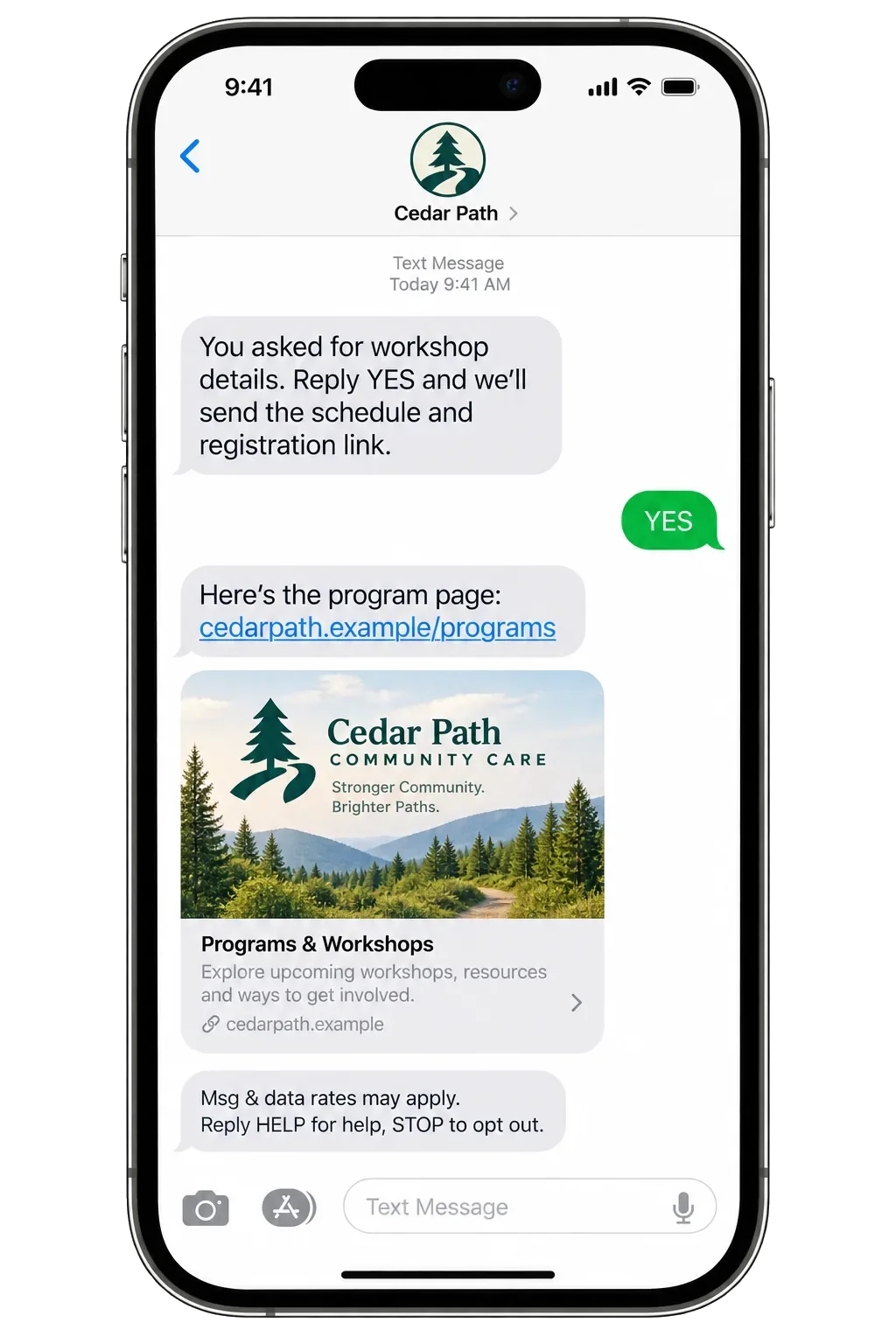
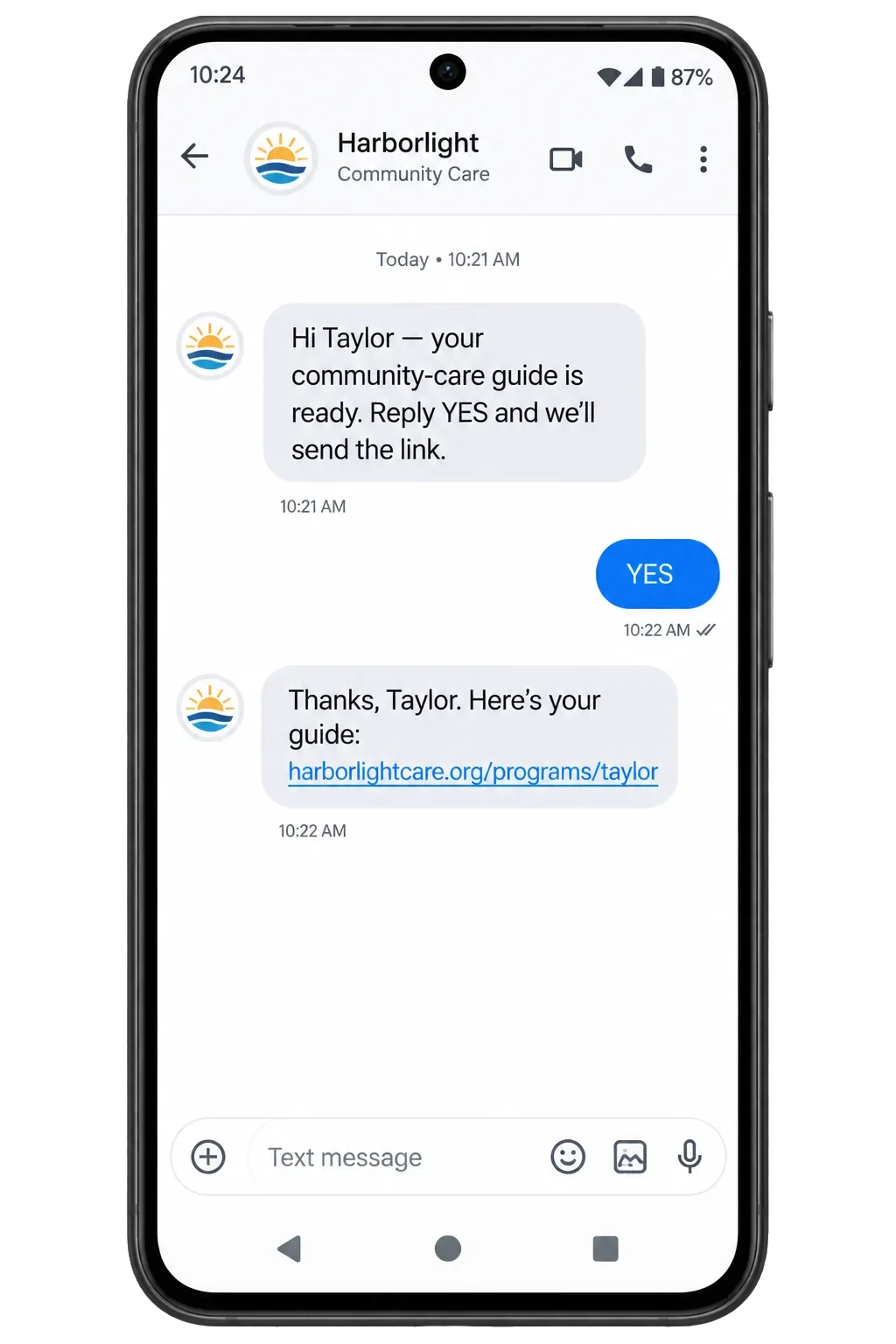
With consent. Health and human-services organizations use consent-based texting for program awareness and enrollment, resource navigation, benefit reminders, appointments and two-way support, without placing sensitive details in the message. MBI builds the opt-in, writes the sequence, sends it and handles the replies, and every send carries the next step rather than the private detail behind it.
The documented texts. Health and human-services organizations use consent-based SMS for program awareness and enrollment, resource navigation, benefit reminders, appointments, and two-way support without placing sensitive details in the text.
CTIA's Messaging Principles and Best Practices state that message senders should support opt-in mechanisms and that messages should be sent only after the consumer has opted in to receive them; that senders should not use opt-in lists that have been rented, sold or shared and should create and vet their own; that consumers should have the ability to opt out at any time through multiple mechanisms; and that senders should acknowledge and honor all opt-out requests by sending one final opt-out confirmation message per campaign.
CTIA Messaging Principles and Best Practices, May 2023, §§5.1.2–5.1.4
SMS
SMS
Printing
What gets printed behind a class and a referral conversation?
The short answer
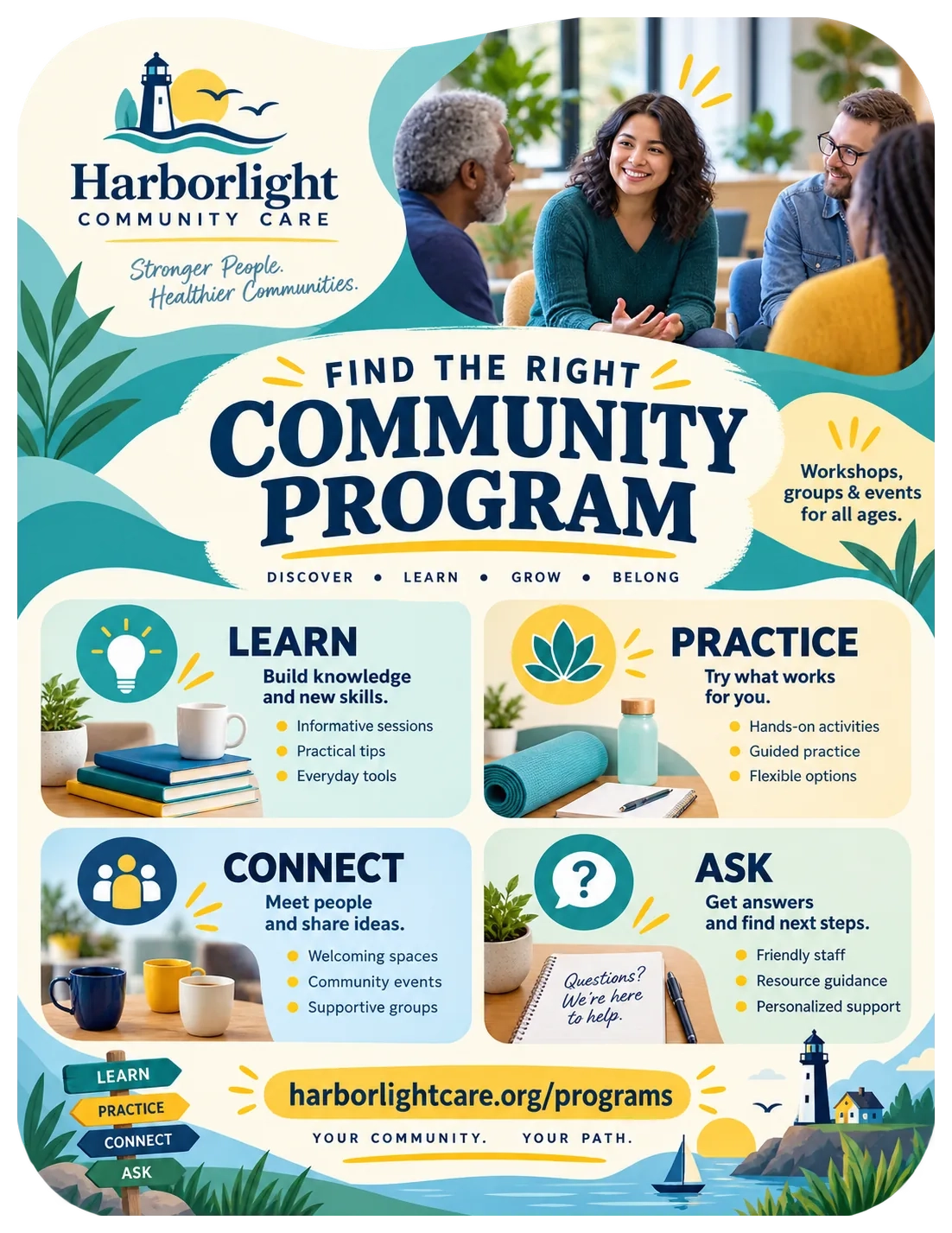
Introductory flyers, provider fact sheets and evidence summaries, patient trifold brochures, class-schedule handouts, outreach folders, posters and follow-up postcards. One production house prints the set, so the piece on a clinician's desk, the handout in the room and the poster on the wall describe the same program in the same words.
The formats. Introductory flyers, provider fact sheets and evidence summaries, patient trifold brochures, class-schedule handouts, outreach folders, posters and follow-up postcards.
In house. Printing at MBI is commercial and variable-data printing produced in house.
Guide · Printing
Checklist · Printing
Questions
Questions a community program asks before it mails
Searched for community based care marketing, community care organization marketing or community care hub marketing? Same work, same answers.
What is in a community-based care campaign from MBI?
Three campaigns and the print behind them: provider outreach to increase referrals and participation in community programs; enrollment outreach for evidence-based chronic-disease self-management and falls-prevention classes and workshops; and a consent-based texting program carrying program enrollment, resource navigation, benefit deadlines and appointment reminders. MBI plans the audience, prints the pieces, mails them and runs the texting.
How does direct mail reach the providers who could refer?
Provider outreach mailers and follow-up postcards can promote the chronic-disease self-management or falls-prevention workshops and classes a program has available, so the piece lands on a clinician's desk rather than in a participant's mailbox. MBI builds the practice audience, prints the mailer and the follow-up postcard, and mails both.
What kind of classes does the outreach promote?
Evidence-based self-management and falls-prevention workshops and classes, promoted through provider and community outreach. MBI handles the invitation mail, the class-schedule handout, the printed materials for the room and the reminder texts, so a participant meets the same session in more than one place before it starts.
Is text messaging allowed for the people in our programs?
With consent. Health and human-services organizations use consent-based texting for program awareness and enrollment, resource navigation, benefit reminders, appointments and two-way support. CTIA's messaging principles say messages should be sent only after a consumer has opted in, and that a consumer should be able to opt out at any time. Sensitive details stay out of the message.
What does a consented texting program actually send?
Program-enrollment prompts, resource navigation, benefit-deadline reminders and appointment reminders, each to somebody who opted in first. The message carries the next step, never the sensitive detail behind it, and every send is written to be answered — two-way support is the point, not a broadcast.
Which printed pieces come with a community program campaign?
Introductory flyers, provider fact sheets and evidence summaries, patient trifold brochures, class-schedule handouts, outreach folders, posters and follow-up postcards. Commercial and variable-data printing is done in house, so the whole set is produced in one place and describes the program the same way wherever it turns up.
How is a community program mailing priced?
A program drop is quoted rather than priced from a rate card. It resolves to two costs, producing the piece and mailing it, and the quantity, the format, the data work behind the practice or household list, and postage and sortation move both. The direct mail cost page, /capabilities/direct-mail/direct-mail-cost, takes each in turn.
What keeps protected health information out of a community program campaign?
The audience. Provider outreach mail goes to practices, and a text goes only to somebody who opted in. Under 45 CFR 164.508(a)(3) a covered entity must obtain an authorization for any use or disclosure of protected health information for marketing, except a face-to-face communication made to an individual or a promotional gift of nominal value.
Get started
Start a community program campaign.
Say which organization it runs for and which class or program it points at. It goes to a real member of the MBI team, not a queue.