
Professional & Financial / Legal, Tax & Estate Services
Tax preparation marketing for a tax office's season
Tax preparation marketing from MBI is three campaigns inside one tax season: a tax-season local postcard offer campaign carrying the office's discounted-service or refund-related offer, coordinated Facebook tax-preparation offer ads reinforcing that same tax-season offer, and an opt-in prior-client tax-season appointment and deadline reminder SMS campaign.
Not sure where to start? Talk with our teamDirect mail
Who receives a tax preparation direct mail drop, and why does it repeat?
The short answer
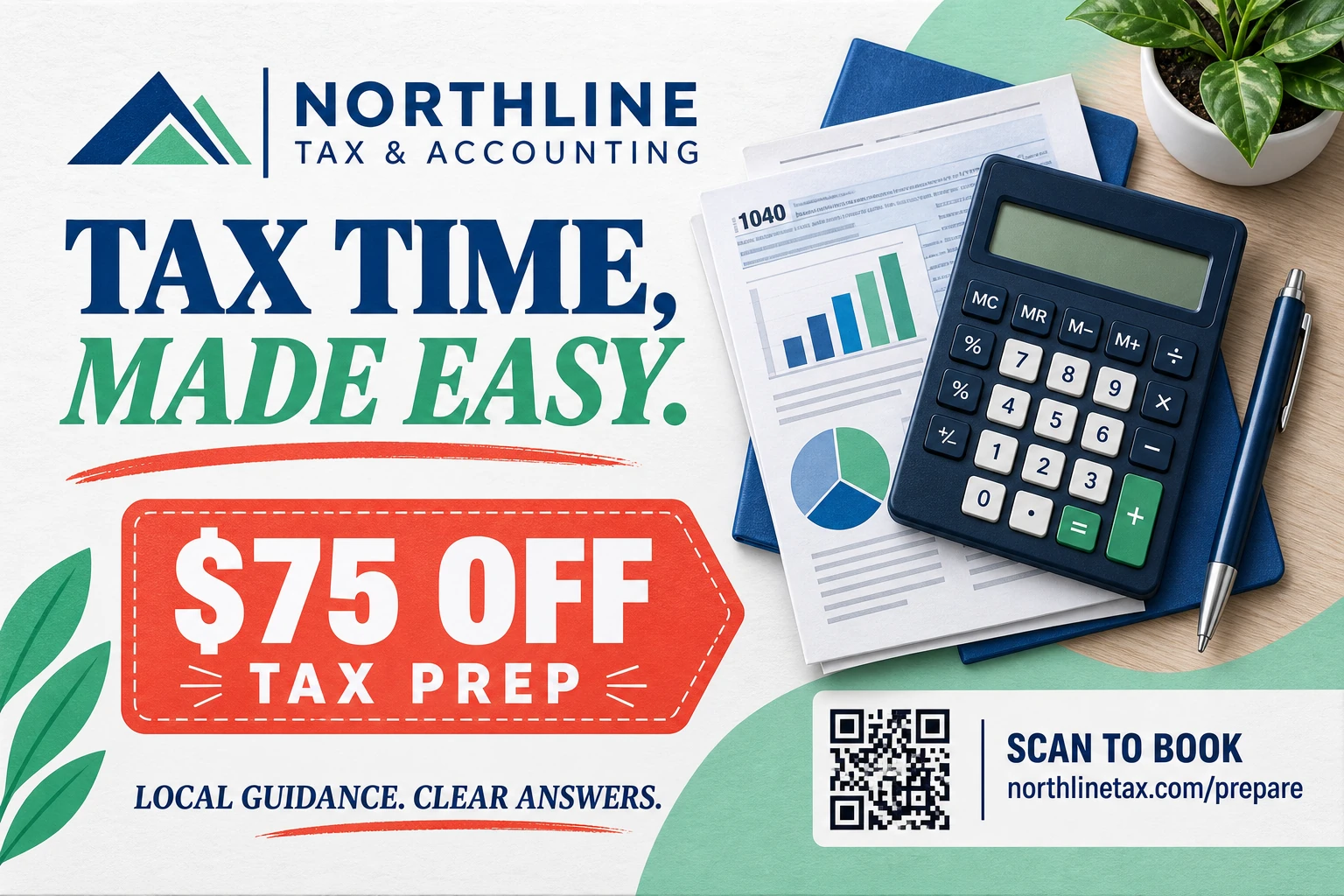
The drop is local, and it repeats. The tax-season postcards carrying the tax office's discounted-service or refund-related offer go to a local list, and the campaign mails them repeatedly rather than once. MBI selects the addresses, prints the card and mails each drop.
The three campaigns. The three campaign concepts for this vertical are a tax-season local postcard offer campaign, coordinated Facebook tax-preparation offer ads, and an opt-in prior-client tax-season appointment and deadline reminder SMS campaign.
What the evidence supports. Evidence supports repeated, local tax-season postcards carrying a discounted-service or refund-related offer.
USPS Domestic Mail Manual 602.5 provides that, except for mail bearing an alternative address format, each address in a mailing at commercial First-Class Mail presorted or automation prices or USPS Marketing Mail prices is subject to the Move Update standard, and that each address and associated addressee used on the mailpieces in a mailing must be updated within 95 days before the mailing date with one of the USPS-approved methods, which include Address Change Service and the National Change of Address Linkage System (NCOALink).
USPS Domestic Mail Manual 602.5
direct mail marketing services direct mail mailing lists targeted direct mail
Postcard · Direct Mail
It repeats
The offer
What offer does a tax season postcard campaign put on the card?
The short answer
The office's own offer. A tax-season local postcard offer campaign puts a discounted-service or refund-related offer on the card, and those are the two offer shapes the tax-season postcards carry. MBI designs the card around that offer, prints it and mails it.
One team. MBI plans, produces and delivers direct mail, print and digital campaigns from a single team in DeLand, Florida, and data, print and delivery have been in-house since 1989.
FTC advertising guidance for small business states that advertising must be truthful and non-deceptive, that advertisers must have evidence to back up their claims, and that advertisements cannot be unfair; an ad is deceptive when it contains a statement, or omits information, that is likely to mislead consumers acting reasonably under the circumstances and is material to a consumer's decision to buy or use the product.
FTC, Advertising FAQ’s: A Guide for Small Business
The card around it
Facebook and Instagram
How do tax preparation Facebook ads work alongside the postcard drop?
The short answer
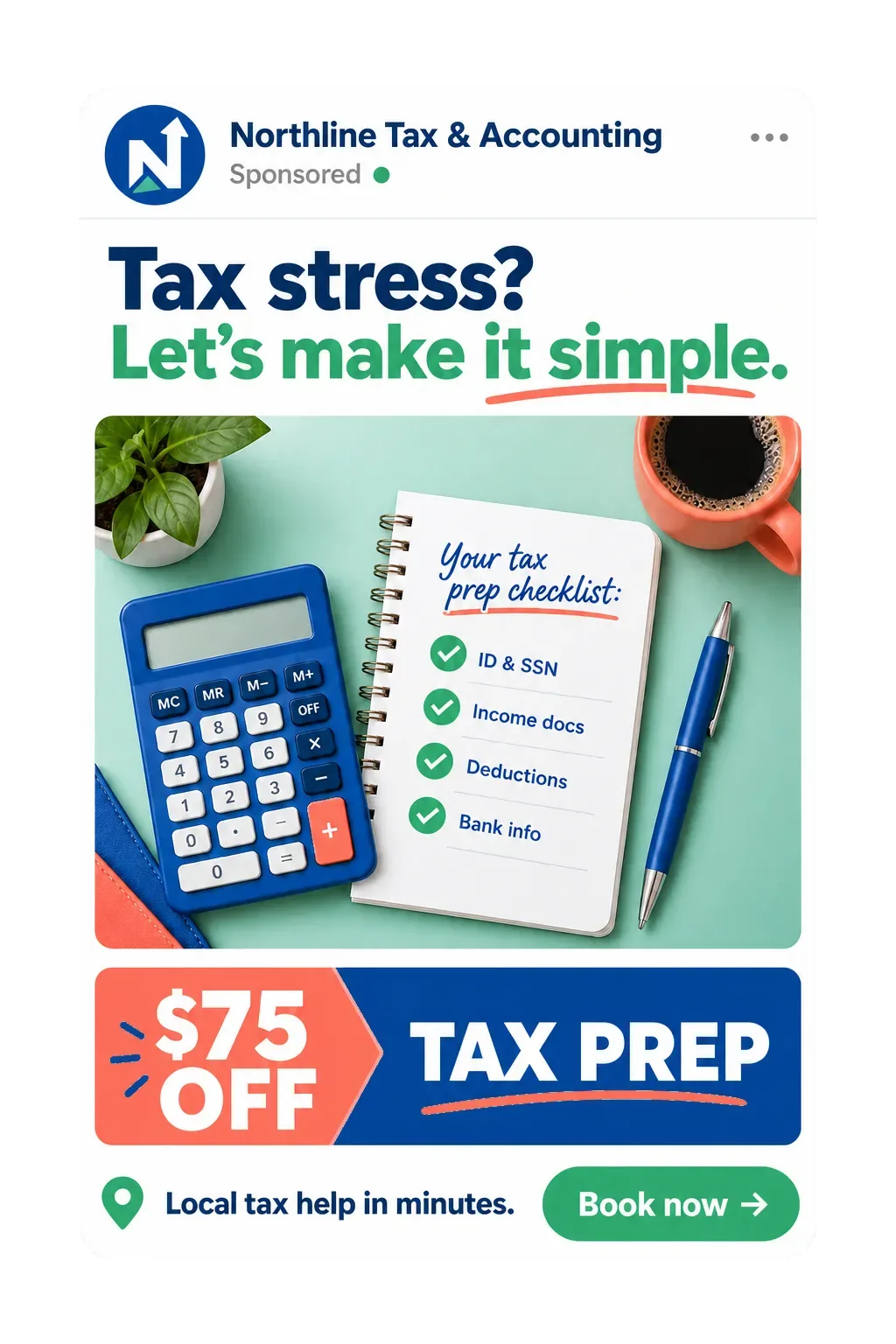
One offer, two surfaces. Matching Facebook ads run alongside the postcard drop and reinforce the same tax-season offer rather than carrying a different one. MBI builds and runs those coordinated Facebook tax-preparation offer ads beside the drop it prints and mails for the tax office.
What the case records. The cited tax-office case ran matching Facebook ads alongside the postcard drop to reinforce the same tax-season offer.
Meta's advertising standards state that advertisers are responsible for understanding and complying with all applicable laws and regulations, and that ads must not promote products, services, schemes or offers using identified deceptive or misleading practices, including those meant to scam people out of money or personal information.
Meta, Advertising Standards
digital advertising services direct mail and digital marketing
Meta ad · Facebook
Meta carousel · Facebook

Reel · Instagram

SMS
What does tax preparation text message marketing send to prior clients?
The short answer
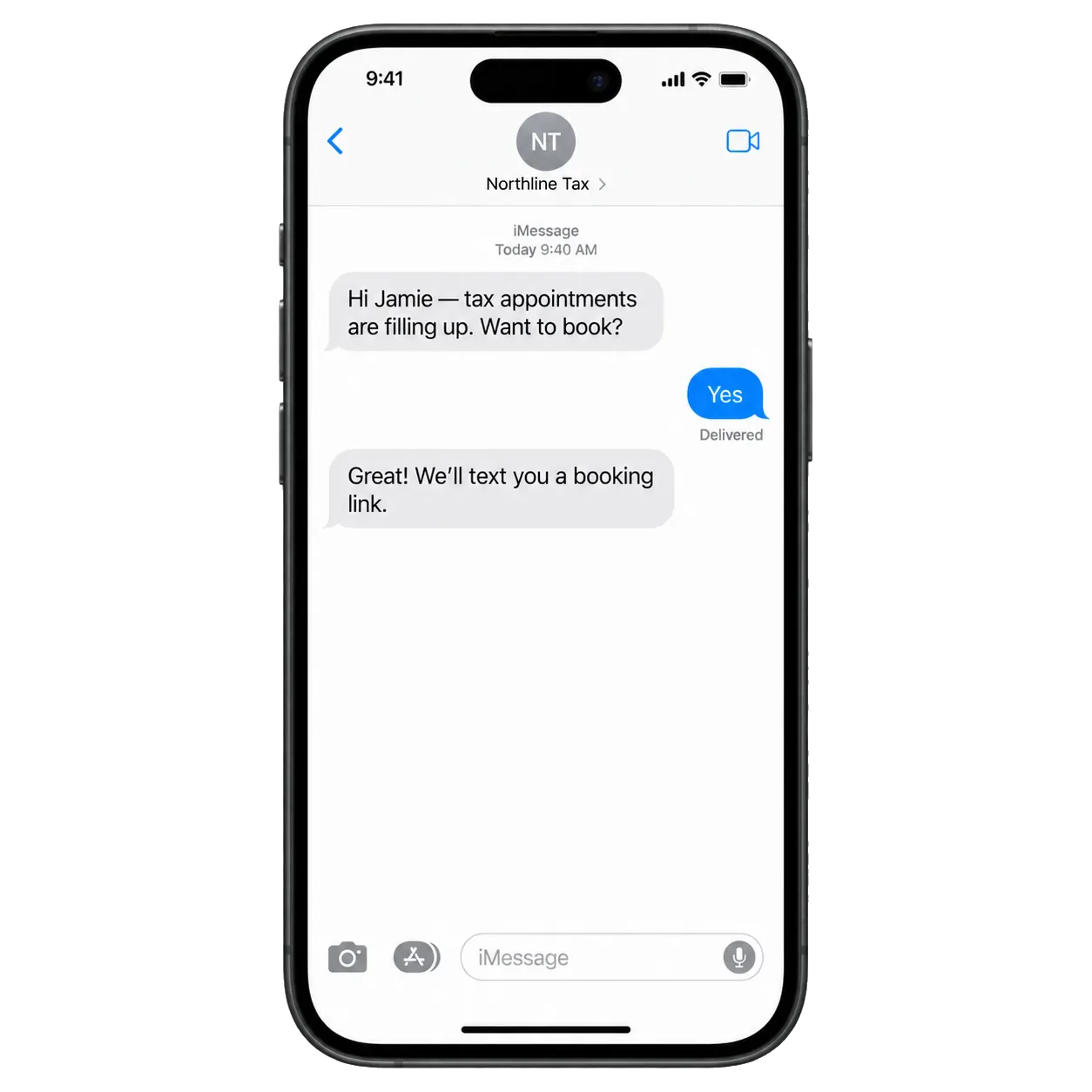
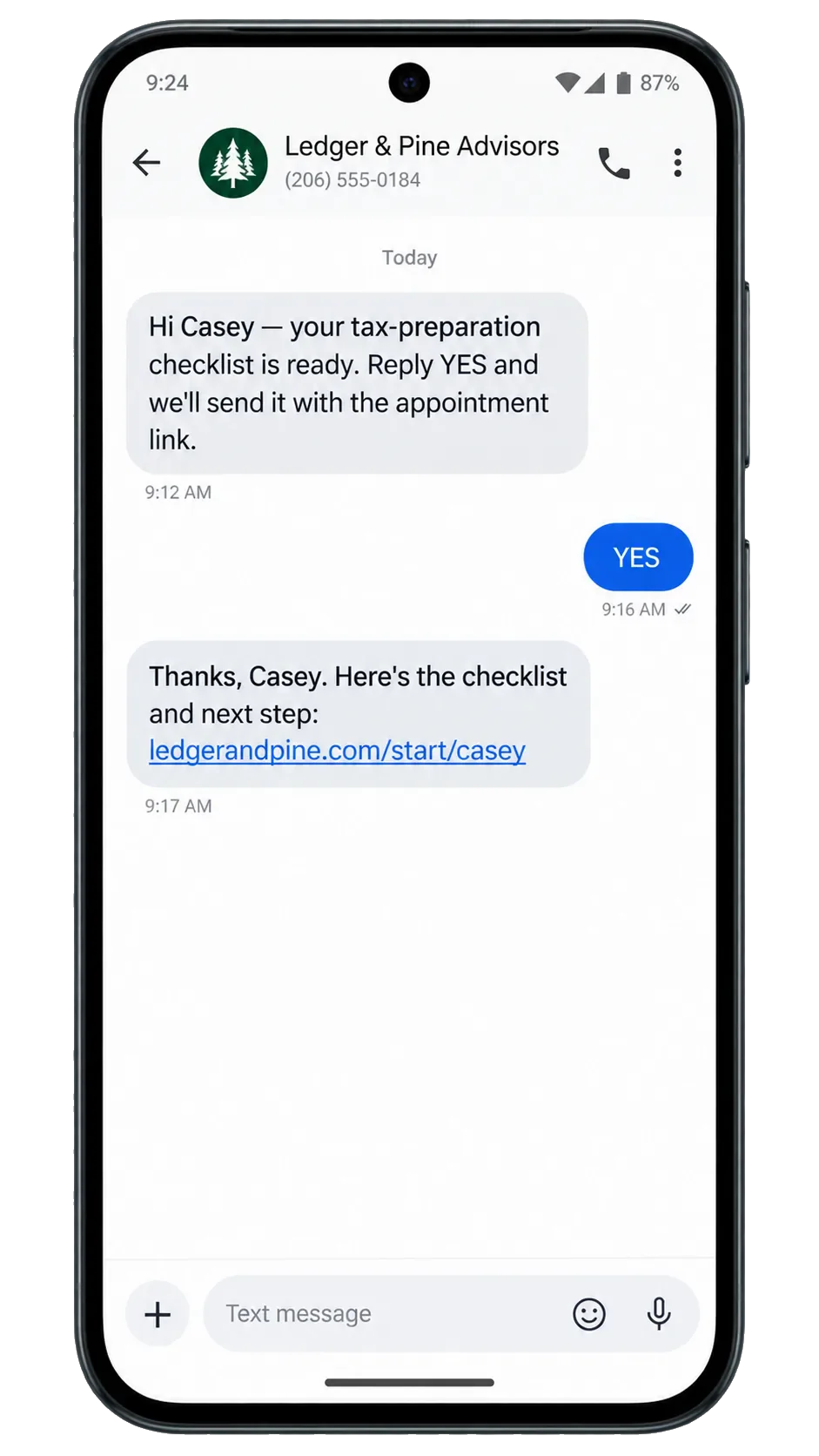
For prior clients who opted in, texts can prompt tax-season booking and send deadline or appointment reminders. CTIA's messaging principles say messages should be sent only after the consumer has opted in, and that message senders should not use rented, sold or shared opt-in lists and should create and vet their own.
CTIA's Messaging Principles and Best Practices state that message senders should support opt-in mechanisms and that messages should be sent only after the consumer has opted in to receive them, and list entering a telephone number through a website, clicking a button on a mobile webpage, sending a message containing an advertising keyword, initiating the text message exchange, signing up at a point-of-sale or other on-site location, and opting in over the phone using interactive voice response among the mechanisms by which a consumer might demonstrate opt-in consent; senders should also document opt-in consent by retaining, among other data, the timestamp of consent acquisition and the consent acquisition medium.
CTIA Messaging Principles and Best Practices, May 2023, §5.1.2
CTIA's Messaging Principles and Best Practices state that message senders should ensure consumers have the ability to opt out of receiving messages at any time, should support multiple mechanisms of opt-out including phone call, email or text, and should acknowledge and honor all consumer opt-out requests by sending one final opt-out confirmation message per campaign; and that message senders should not use opt-in lists that have been rented, sold or shared to send messages and should create and vet their own opt-in lists.
CTIA Messaging Principles and Best Practices, May 2023, §§5.1.3–5.1.4
digital advertising services financial services marketing agency
SMS
SMS
Who said yes
Printing
Which printed piece does a tax office mail?
The short answer
Direct-mail postcards. That is the print format behind a tax office's season, and the card comes from MBI's commercial and variable-data printing, in-house. Data, print and delivery have been in-house since 1989, so one team plans the tax-season campaign, produces the card and delivers it.
The format. Direct-mail postcards.
In house. Printing at MBI is commercial and variable-data printing produced in house.
USPS Domestic Mail Manual 201.1.2.1 sets the card-price physical standards at not less than 3-1/2 inches high, 5 inches long and 0.007 inch thick, with cards more than 4-1/4 inches high or 6 inches long, or both, required to be a minimum of 0.009 inch thick; at not more than 4-1/4 inches high, 6 inches long or 0.016 inch thick for each stamped card and each half of a double postcard; at not more than 6 inches high, 9 inches long or 0.016 inch thick for each postcard; and within an aspect ratio (length divided by height) of 1.3 to 2.5, inclusive, which the same standard states and cross-references to 3.7, excepting the 11-inch by 8.5-inch sheet a mailer may use to create four identical-size postcards.
USPS Domestic Mail Manual 201
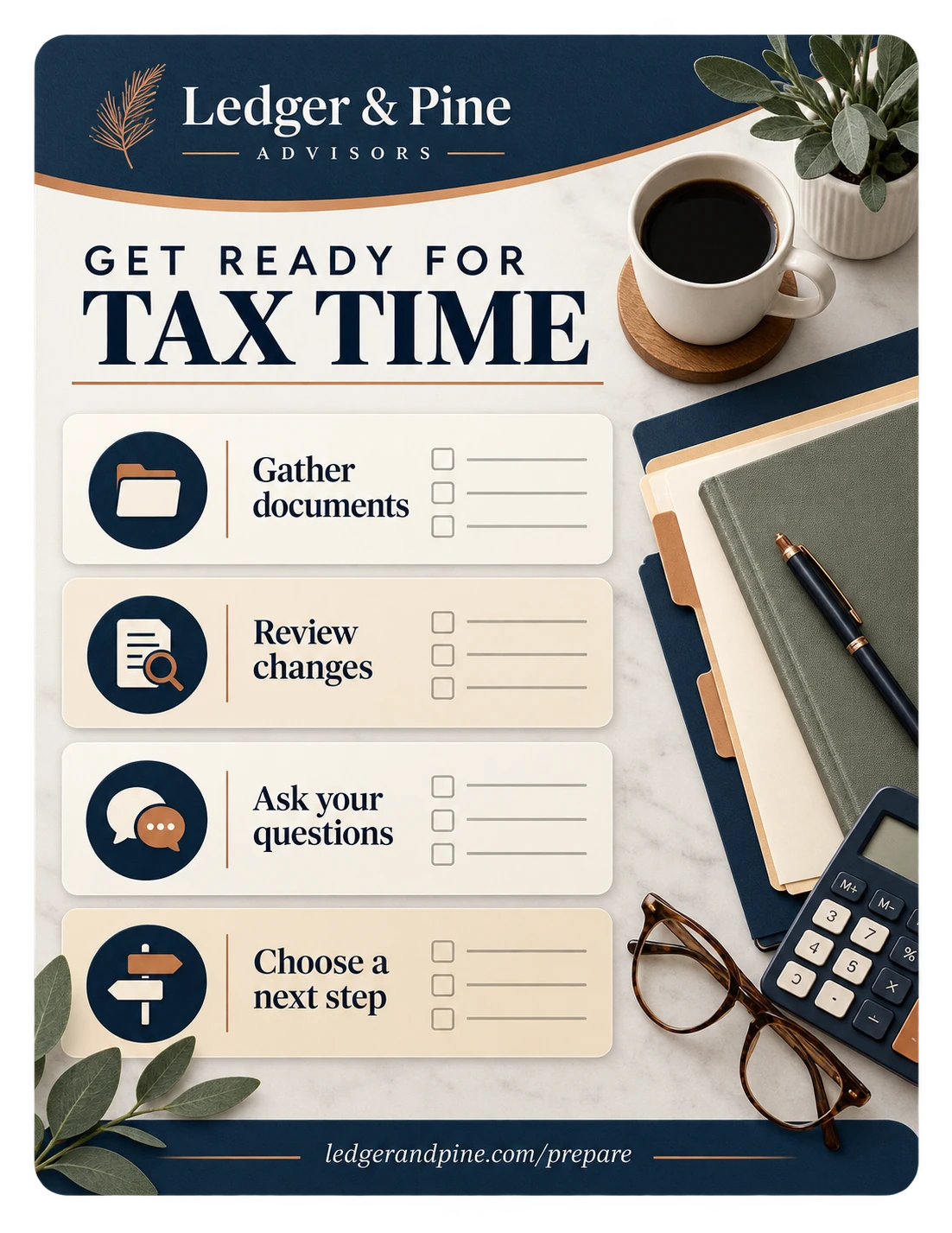
Checklist · Printing
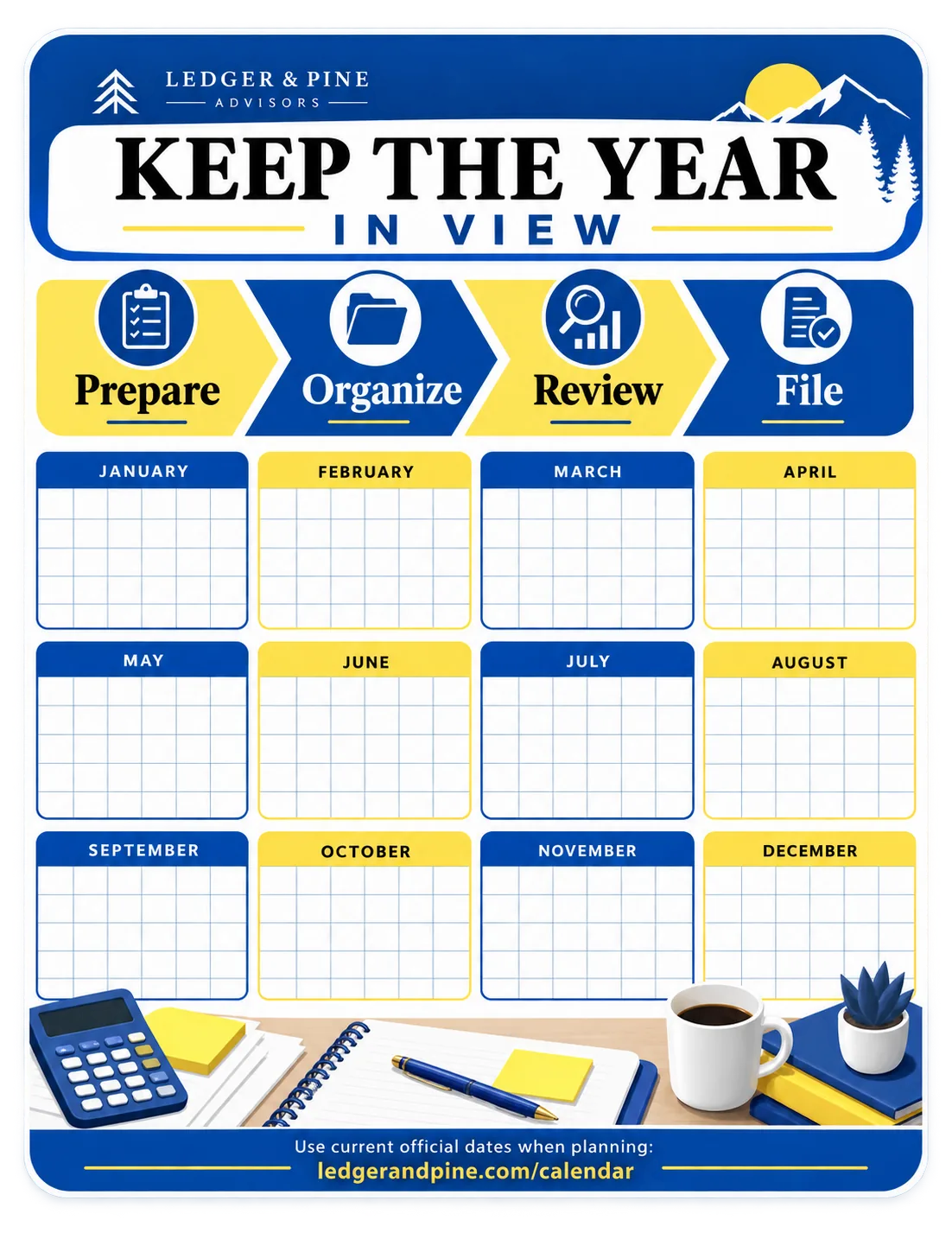
Calendar · Printing
Questions
Questions a tax office asks before it mails
Searched for tax prep marketing, tax office marketing or tax preparation advertising? Same work, same answers.
What does MBI run for a tax office in tax season?
A tax-season local postcard offer campaign; coordinated Facebook tax-preparation offer ads; and an opt-in prior-client tax-season appointment and deadline reminder SMS campaign. MBI plans, designs, prints and mails the card, builds and runs the ads, and sends the opted-in texts.
Should the Facebook ads say the same thing as the postcard?
Yes. Matching Facebook ads run alongside the postcard drop and reinforce the same tax-season offer — coordinated Facebook tax-preparation offer ads are one of the three campaigns a tax office's season is built from. MBI builds the ads and runs them alongside the drop.
What has to be true of a tax-season offer before it runs?
FTC guidance for small business says advertising must be truthful and non-deceptive, that advertisers must have evidence to back up their claims, and that advertisements cannot be unfair — the tax-season postcard and the ads alike. Meta adds that advertisers are responsible for understanding and complying with all applicable laws and regulations.
When may a tax office text a client from last season?
After that client has opted in. CTIA's messaging principles say senders should support opt-in mechanisms and that messages should be sent only after the consumer has opted in, and list entering a telephone number through a website and signing up at a point-of-sale among the mechanisms. Texts can then prompt booking and send deadline or appointment reminders.
What moves the price of a tax office's postcard drop?
Producing a tax office's tax-season postcard and mailing it are the two costs behind any quote, and seven decisions move those two numbers, among them Quantity, Format and finished size, Paper and weight, and Postage, mail class, and sortation. /capabilities/direct-mail/direct-mail-cost walks a tax office through all seven.
Does a tax-season postcard have to be a particular size to mail at card prices?
A tax-season postcard has to sit inside the USPS card standard: not more than 6 inches high, 9 inches long or 0.016 inch thick, and a card more than 4-1/4 inches high or 6 inches long must be at least 0.009 inch thick. MBI sets the trim before the run.
What has to happen to the addresses before a tax-season drop mails?
The tax office's addresses are run against the postal move file first. USPS requires each address in a mailing at commercial First-Class Mail presorted or automation prices, or USPS Marketing Mail prices, to be updated within 95 days before the mailing date using an approved method such as NCOALink; mail using an alternative address format is excepted.
Get started
Start a tax season campaign.
Say which of the three campaigns it is, and the offer the office will stand behind. It goes to a real member of the MBI team, not a queue.